
5 Key Factors to Consider When Choosing an Explosion-Proof Camera
 Sep 17, 2026|
 View:36
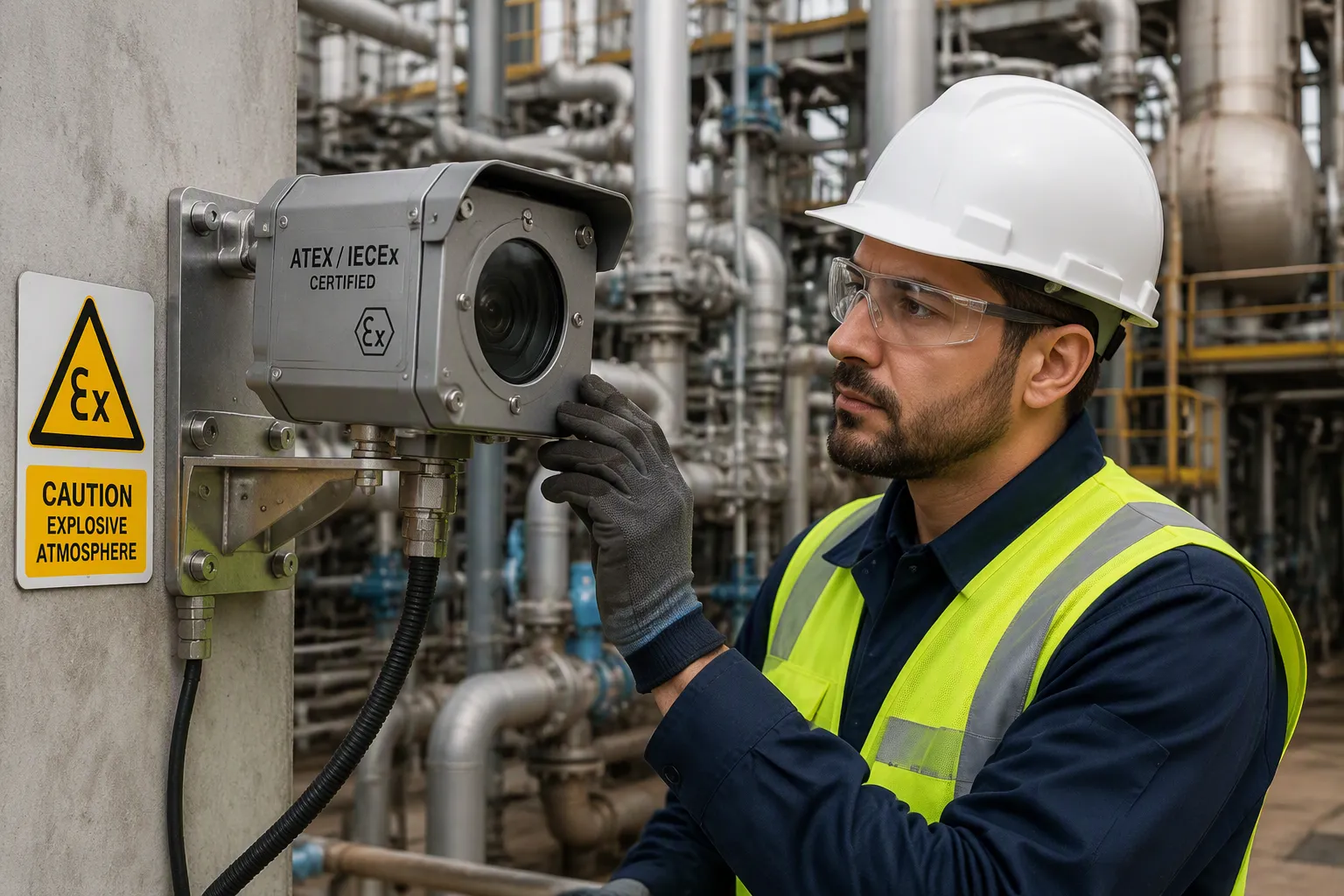
Choosing the wrong explosion-proof camera for heavy industrial environments—such as cement kilns, steel blast furnaces, or petrochemical refineries—can trigger catastrophic risks, compliance failures, and costly unplanned downtime. A single equipment mismatch may lead to regulatory fines, production halts, or severe safety incidents. Five critical factors demand attention: certifications, ingress protection combined with anti-coking features, system integration, extreme environmental durability, and predictive maintenance. Each factor is vital for health and safety compliance in hazardous zones. This article examines these 5 key factors in depth to empower plant managers and engineers to make confident, compliant purchase decisions. Ignoring any one factor can compromise your entire surveillance and process monitoring system.
Key Takeaways
Verify Certifications First: Ensure ATEX/IECEx markings match your specific hazardous area classification (Zone/Division) and gas/dust groups.
Demand More Than Just IP Ratings: In dusty environments like coal grinding stations, look for integrated air-purging or pneumatic wipers to prevent lens blinding.
Plan for Heavy-Duty Integration: Ensure the system supports industrial protocols and has the bandwidth to handle high-resolution thermal and visual data.
Check Extreme Durability: Standard housings fail near furnaces. Verify T-ratings and specialized cooling jackets (like Luming's LM-NZ500) for extreme thermal radiation.
Schedule Predictive Maintenance: Choose equipment that integrates with CMMS platforms to automate inspection schedules and reduce manual entry into hazardous zones.
Certifications: The Safety Backbone of an Explosion-Protected Camera
Understanding Zone, Gas Group, and Temperature Class for Heavy Industry
An explosion-proof camera must match strict criteria before installation in hazardous locations like coal mills or gas processing areas. The first criterion is area classification. Zone 0 describes an area where an explosive gas atmosphere is present continuously. Zone 1 is where it is likely to occur. Zone 2 is where it is not likely, or will only exist for a short time. Zone 0 represents the highest risk, followed by Zone 1 and then Zone 2.
The second criterion is the gas or dust group. Different substances have different ignition properties; for example, hydrogen requires stricter containment than propane. The third criterion is the temperature class (T-rating). A T4 rating permits a maximum surface temperature of 135°C. A T6 rating holds the surface to a maximum of 85°C. Equipment rated T6 can be used in environments requiring any T-code.
Temperature Class | Maximum Surface Temperature | Applicability in Hazardous Zones |
|---|---|---|
T4 | 135°C | Cannot be used where T5 or T6 is required |
T6 | 85°C | Acceptable in any T1 through T6 area |
How to Verify the Right Certification Mark
An ATEX-certified camera carries marks that verify compliance. Buyers must confirm that the Notified Body matches the marking and is listed on NANDO or UKMCAB. For IECEx certificates, the official IECEx website provides a database for validation. Counterfeit or invalid certifications are a known risk. Technical plausibility assessment can reveal fraud. Look for poor construction, missing visible certification markings, or inability of the supplier to provide legitimate documentation. Changzhou Luming holds ISO9001 certification and rigorous product testing, illustrating the importance of manufacturer quality systems in ensuring reliable certification for heavy industry.
Ingress Protection, Anti-Coking, and Corrosion Resistance
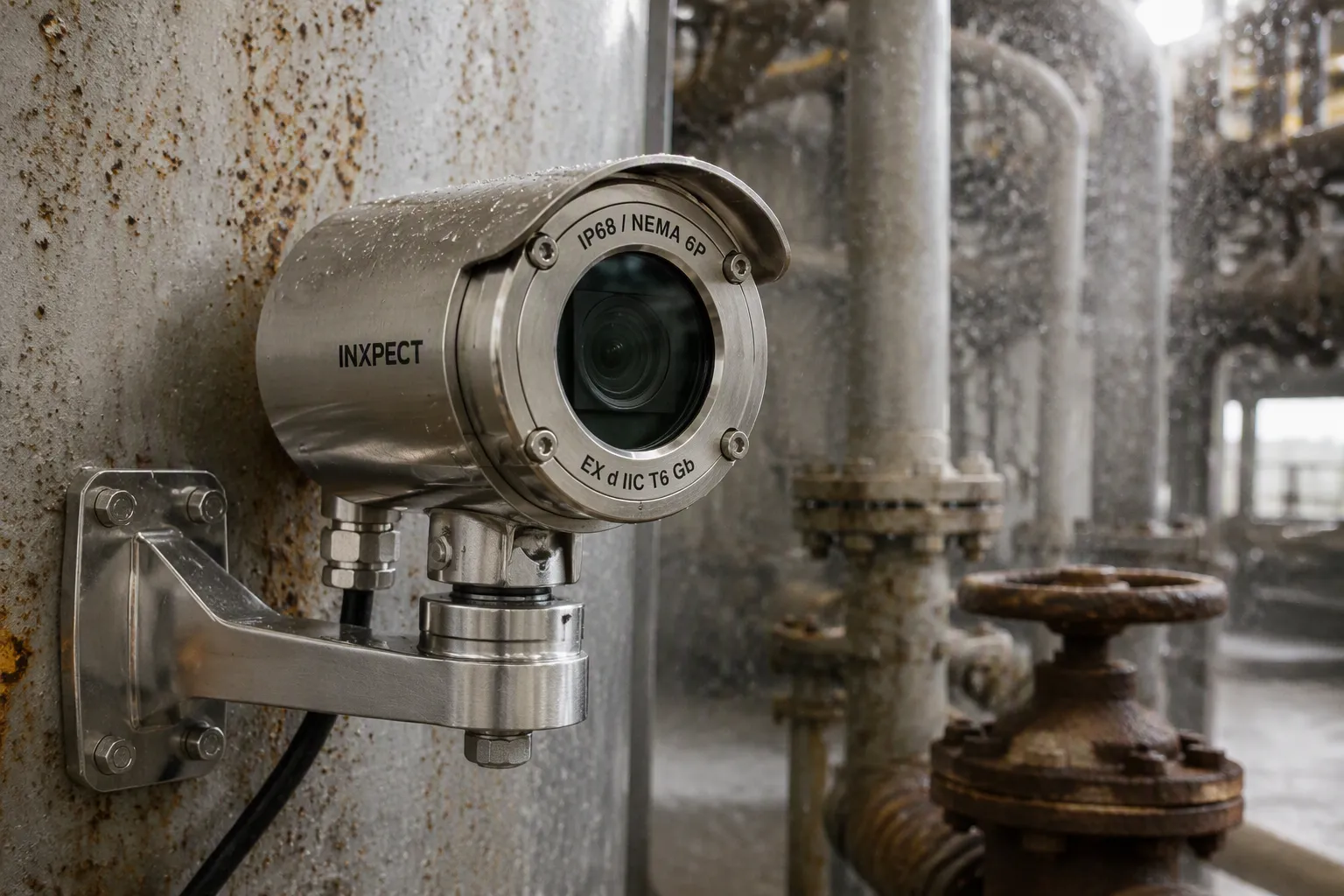
Choosing the Right IP Rating and Air-Purging for Kilns and Silos
The ingress protection (IP) rating determines how well a unit resists dust and water entry. For heavy dusty environments like cement kiln tails or coal grinding stations, the minimum requirement is IP6X. The housing must be completely dust-tight to prevent combustible dust ingress. Facilities with active chemical washdown procedures need at least IP66.
Heavy Industry Environment | Minimum Protection Required |
|---|---|
Coal mills, Cement kiln tails (combustible dust) | IP6X (dust-tight) + Air Purging |
Petrochemical washdown areas | IP66 or higher |
Submerged or high-pressure jet areas | IP67 or IP68 |
However, in industries like glass manufacturing and cement, a high IP rating alone is not enough. Airborne dust and chemical vapors quickly coat camera lenses, blinding the system. An effective explosion-proof camera for kilns must feature an integrated air-purging system (creating positive pressure to repel dust) or an explosion-proof pneumatic wiper. Without this anti-coking feature, the camera becomes useless within weeks, regardless of its IP rating.
The Impact of Corrosive Substances on Camera Housing
Corrosive substances add a layer of complexity. A petrochemical area may be classified as Zone 2 for gas risks but also contain sulfuric acid vapors. These vapors attack standard stainless steel. Engineered-plastic or composite housings, or 316L marine-grade stainless steel, offer better chemical resistance. High-performance corrosion-resistant cameras use borosilicate or chemically hardened glass windows to resist etching from acids and maintain optical clarity under chemical attack.
Integration Compatibility with DCS and Centralized Control Systems
Analog vs. IP: Upgrading Legacy Plant Infrastructure
Many older heavy industrial plants still rely on legacy analog infrastructure. A modern explosion-proof camera must fit the existing ecosystem. While analog uses coaxial cables, IP cameras utilize network cables. A full replacement is costly. Hybrid recorders accept both inputs, protecting the existing investment and allowing gradual upgrades. This backward compatibility reduces downtime during retrofits.
Protocols and Bandwidth for Smart Factory Integration
Modern explosion-proof camera manufacturers design equipment for Industry 4.0. Systems must support industrial protocols like ONVIF, RTSP, and Modbus TCP to integrate seamlessly with a plant's DCS (Distributed Control System) or PLC. Network bandwidth planning is critical when adding high-resolution visual and thermal streams.
Resolution / Stream Type | Codec | H.265 @ 15 fps (Approx.) |
|---|---|---|
2 MP (1080p) | H.265 | ~2 Mbps |
4 MP (2560×1440) | H.265 | ~4 Mbps |
Thermal + Visual Dual Stream | H.265 | ~6-8 Mbps |
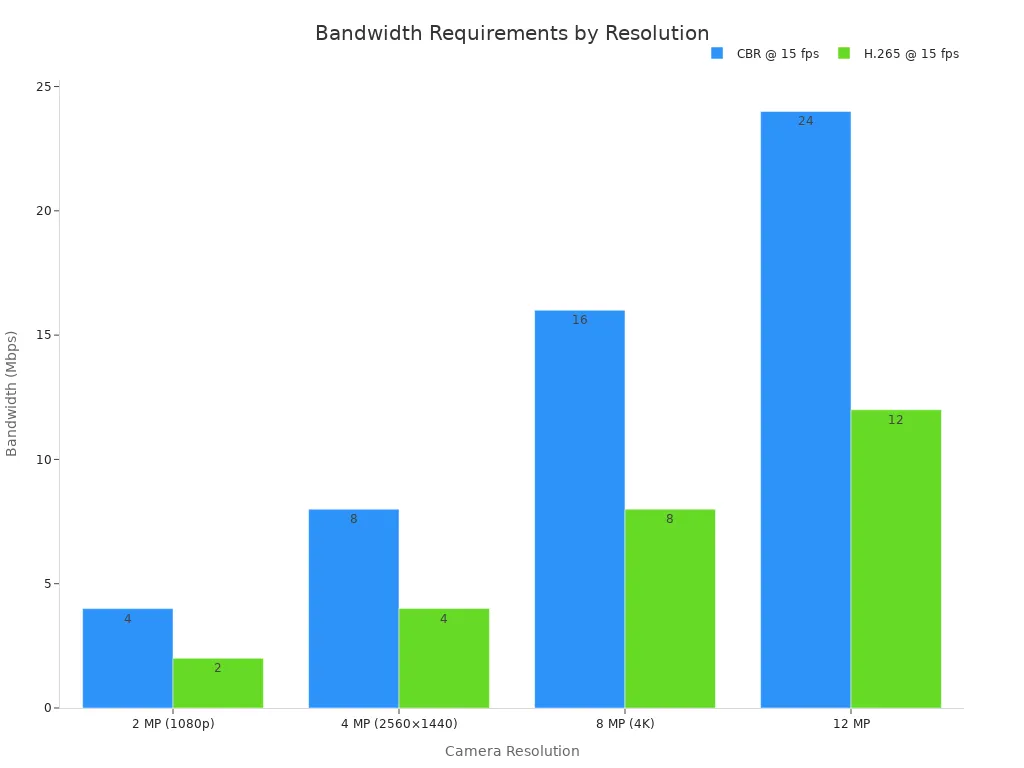
For a 50-camera system utilizing 4MP and thermal dual streams, expect sustained bandwidth requirements between 200 to 300 Mbps. It is crucial to provision 1 Gbps uplinks from access layer PoE switches to the core NVR/Server to prevent packet loss during critical alarm events.
Extreme Environmental Durability and Thermal Management
Surviving High-Temperature Radiation in Kilns and Furnaces
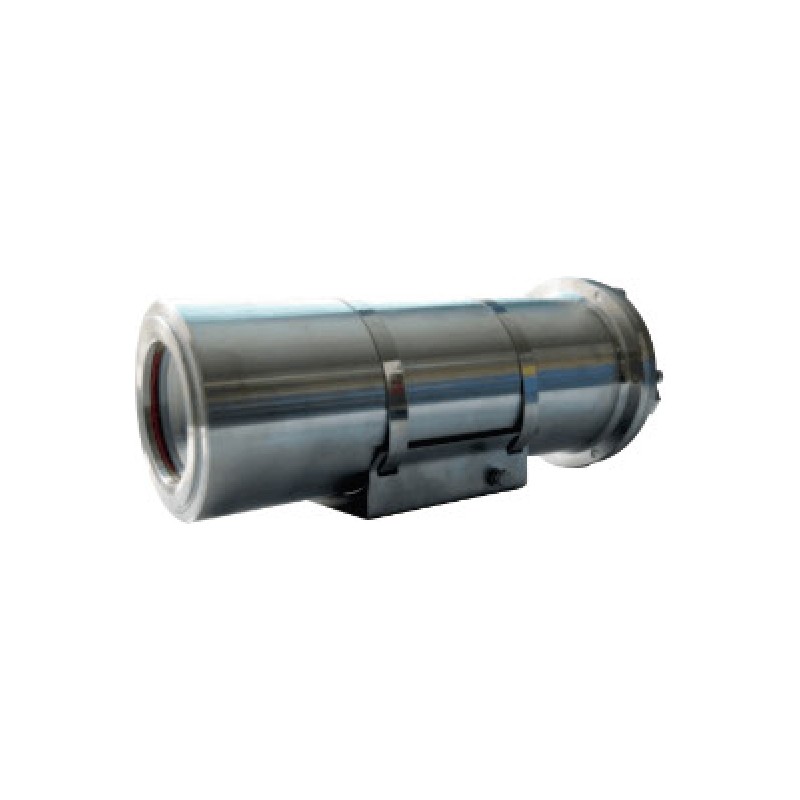
An explosion-proof camera must survive the physical extremes of its installation site. Standard explosion-proof housings fail when exposed to the intense thermal radiation of a cement rotary kiln, glass melting furnace, or steel blast furnace. This is where specialized high-temperature explosion-proof systems, like Luming’s LM-NZ500, become critical.
Unlike standard housings, the LM-NZ500 high-temperature industrial camera utilizes a specialized water/air-cooled protective jacket. This active cooling maintains a safe internal temperature for the electronics and optical lens, while simultaneously meeting ATEX/IECEx explosion-proof standards for the surrounding combustible gases. It is designed for furnace walls approximately 500mm thick and operates reliably in some of the harshest industrial environments on earth.
Temperature Class (T-Ratings) and Impact Resistance (IK)
Beyond active cooling, the external housing must meet strict Temperature Class (T-rating) limits to prevent ignition of surrounding gases. A T6 rating caps surface temperature at 85°C. Impact resistance is equally vital. Cameras near heavy machinery or material handling equipment face constant vibration and accidental impact. A high IK rating (e.g., IK10) confirms the enclosure and borosilicate glass window will not crack, which would expose internal electronics to combustible dust and create an ignition risk.
Feature | Standard Industrial | Heavy-Duty / High-Temp (e.g., LM-NZ500) |
|---|---|---|
Ambient Operating Temp | -10°C to +50°C | -40°C to +70°C (with active cooling for higher ambient) |
Impact Resistance | IK08 | IK10 (Heavy vibration/impact zones) |
Thermal Management | Passive Heat Sink | Water/Air-Cooled Jacket |
Maintenance and Predictive Diagnostics
Service Intervals and IEC 60079-17 Compliance
An explosion-proof camera requires a structured maintenance schedule to preserve safety and performance. IEC 60079-17 provides the governing framework. Visual inspections occur quarterly (checking enclosure damage, dust accumulation). Close inspections happen annually (gasket condition, bolt torque). Detailed inspections every three to five years require disassembly to check flame paths. In heavy industry, minimizing manual entry into hazardous zones is a priority.
Inspection Type | Interval | Enclosure Open? |
|---|---|---|
Visual | Quarterly | No |
Close | Annually | No |
Detailed | Every 3–5 years | Yes (Requires certified technician) |
Predictive Maintenance via Thermal Imaging
To reduce maintenance costs and improve plant reliability, modern systems integrate thermal imaging to transform heat signatures into actionable intelligence. These systems identify equipment degradation (like refractory wear in kilns or electrical faults in substations) weeks before visible symptoms appear. Integration with CMMS platforms (like SAP PM or IBM Maximo) enables automated work orders. Differential temperature alarms trigger notifications via API before a critical failure occurs. This approach supports monitoring in hazardous areas safely and efficiently.
Is Your Furnace Monitoring System Compliant and Reliable?
Don't wait for a catastrophic failure or a compliance audit to upgrade your hazardous area surveillance. Ensure your equipment can withstand the heat, dust, and explosive risks of heavy industry. Request a Free Engineering Site Assessment from Luming's experts today.
Use these 5 key factors as a practical checklist before your next purchase. Confirm certifications first. Then verify ingress protection combined with anti-coking features, DCS integration capabilities, extreme durability (like water-cooled jackets), and predictive maintenance support. Neglecting any one factor can compromise compliance, safety, and uptime. One gap in your surveillance system can halt production.
Buyers should demand full transparency from explosion-proof camera manufacturers regarding certification documents and thermal management capabilities. Evaluate your next purchase against all five factors to ensure optimal safety and performance in your hazardous environment.
FAQ
What certifications should an explosion-proof camera carry for heavy industry?
It needs ATEX, IECEx, or UL certification matching your specific area classification (Zone 1/2), gas/dust group, and temperature class (e.g., T6). Always verify certificates through official databases like NANDO. Changzhou Luming provides full transparency and ISO9001-backed quality systems.
Why is air-purging necessary for cameras in cement and glass kilns?
In high-dust environments, airborne particles quickly coat the lens, blinding the camera. An air-purging system creates positive pressure to repel dust and keep the optical window clean, ensuring continuous monitoring without constant manual wiping.
Can explosion-proof cameras integrate with our existing DCS/PLC systems?
Yes. Modern systems support industrial protocols like ONVIF, RTSP, and Modbus TCP, allowing seamless integration with centralized control rooms, NVRs, and CMMS platforms for automated alarm management.
How do you protect cameras from the extreme heat of a blast furnace?
Standard housings will melt or fail. Specialized high-temperature cameras, like Luming’s LM-NZ500, use active water-cooling or air-cooling jackets to maintain safe internal electronics temperatures while operating directly beside or inside kiln walls up to 500mm thick.
What is the maintenance schedule for explosion-proof equipment?
IEC 60079-17 dictates quarterly visual checks, annual close inspections, and detailed internal inspections every 3–5 years. Using systems with predictive thermal diagnostics and self-cleaning wipers significantly reduces the need for hazardous manual interventions.
Recent News
1.What Are Explosion Proof Cameras?
2026-01-162.ATEX Kiln Camera Guide: Explosion Proof Monitoring
2026-05-203.Top 10 Explosion-Proof Camera Manufacturers in China 2026
2026-04-244.How Do Explosion-Proof Cameras Differ from Regular Cameras?
2026-02-065.How Explosion Proof Camera Works with Different Industries
2026-01-28