



How to Select the Right Explosion-Proof Infrared Camera for Hazardous Areas
 Jun 18, 2026|
 View:20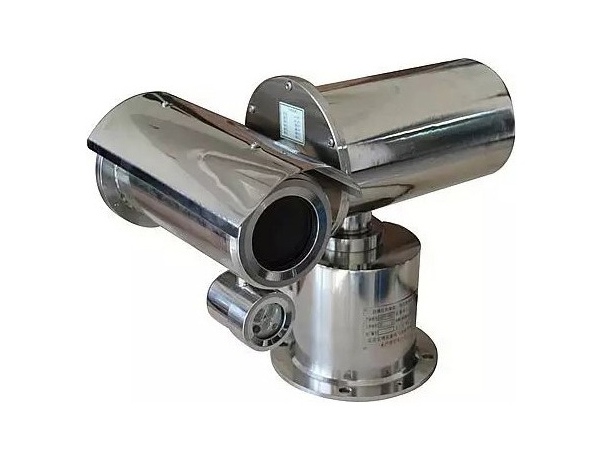
Selecting the appropriate explosion-proof infrared camera for hazardous environments demands a rigorous evaluation of safety certifications, material durability, and advanced thermal imaging capabilities. Standard surveillance equipment poses severe ignition risks in volatile atmospheres. Procurement teams and safety engineers must prioritize the following core selection criteria to ensure operational continuity and personnel safety:
Criteria | Engineering Description |
|---|---|
Safety Certification | Mandatory ATEX, IECEx, or UL compliance for explosive gas/dust atmospheres. |
Material Durability | 304/316L stainless steel housings to withstand extreme corrosion and impact. |
Thermal Capabilities | Infrared profiling for early detection of thermal runaway and equipment hotspots. |
System Integration | Compatibility with Ex-rated junction boxes, armored cabling, and VMS. |
Lifecycle Cost | Balancing upfront CAPEX with long-term predictive maintenance savings. |
Deploying certified explosion-proof infrastructure ensures regulatory compliance and reliable 24/7 monitoring in high-risk zones.
Key Takeaways for Safety Engineers
Prioritize ATEX, IECEx, or UL certifications to guarantee compliance in explosive zones.
Align camera specifications with specific hazard classifications (Zone 0/1/2 or Zone 21/22).
Demand heavy-duty 316L stainless steel housings and tempered glass for extreme marine or chemical environments.
Leverage integrated systems featuring PTZ functionality and AI-driven thermal analytics.
True explosion-proof cameras are engineered to contain internal arcs and prevent external ignition, replacing hazardous manual inspections.
Establish predictive maintenance schedules to ensure long-term reliability of optical and thermal sensors.
Partner with certified manufacturers to navigate complex regional safety standards and NEC 500/505 regulations.
The Critical Need for Explosion-Proof Infrastructure
Hazards in Industrial Environments
Industrial facilities—ranging from petrochemical refineries to pharmaceutical API synthesis plants—operate under constant threat of thermal runaway, combustible dust accumulation, and flammable vapor release. Relying on standard IP67 cameras or manual Lockout-Tagout (LOTO) inspections in these Class I Div 1 areas not only endangers personnel but also violates strict safety regulations. Understanding the specific hazard classification is the first step in specifying the correct industrial surveillance architecture.
The following matrix outlines the primary classes of hazardous materials encountered in heavy industry:
Class | Description | Industrial Examples |
|---|---|---|
Class I | Flammable gases or vapors | Hydrogen, methane, VOCs, gasoline |
Class II | Combustible dust | Coal dust, aluminum powder, flour |
Class III | Ignitable fibers/flyings | Cotton lint, textile fibers |
Engineering Note: Always conduct a comprehensive site hazard assessment (DSEAR/ATEX zoning) before specifying camera hardware.
Safety Benefits of Containment Design
Unlike standard optics, certified explosion-proof enclosures are machined from premium 304 or 316L stainless steel. They are designed to withstand internal pressure and prevent the escape of flames or sparks. At Changzhou Luming Optoelectronics, our thermal management architectures ensure surface temperatures remain well below the auto-ignition thresholds of surrounding gases.
Advanced explosion-proof systems mitigate ignition risks through:
Intrinsically safe circuitry barriers that limit electrical energy transfer.
Heavy-duty thermal dissipation fins to prevent housing overheating.
Hermetically sealed enclosures with specialized tempered glass viewports.
The Fatal Risks of Standard Cameras
Standard commercial cameras have no place in volatile atmospheres. Micro-sparks from internal relays or excessive surface heat from processing chips can instantly ignite flammable gases or combustible dust clouds. Common catastrophic failures prevented by explosion-proof infrastructure include:
Vapor cloud explosions (VCE) in distillation units and storage terminals.
Dust deflagration in silos, pulverizers, and grain elevators.
Ignition events triggered by static discharge or electrical arcing.
Explosion-Proof vs. Intrinsically Safe (IS) Architectures
Design & Application Divergence
While intrinsically safe (IS) devices limit electrical energy to prevent sparks, they often lack the optical power, heavy-duty cooling, and PTZ mechanics required for large-scale industrial monitoring. Explosion-proof housings provide the physical robustness necessary for continuous 24/7 surveillance of chemical reactors, coal mills, and offshore wellheads.
Feature | Intrinsically Safe (IS) | Explosion-Proof (Ex d / Ex e) |
|---|---|---|
Core Principle | Restricts electrical/thermal energy below ignition threshold. | Contains internal explosions; prevents flame transmission. |
Processing Power | Low power; limited AI/thermal analytics capabilities. | High power; supports advanced VMS, PTZ, and thermal profiling. |
Typical Use Case | Portable gas detectors, handheld inspection tools. | Fixed reactor monitoring, offshore platforms, mining conveyors. |
Construction | Lightweight polymers or specialized alloys. | Massive 316L stainless steel or marine-grade aluminum. |
Core Features of Industrial Infrared Systems
Durability and Environmental Ratings
Extreme industrial environments demand uncompromising material science. IP68 ratings guarantee complete submersion protection, while 316L stainless steel offers superior resistance to chlorides, sulfuric acid, and marine salt spray.
Critical hardware specifications include:
CNC-machined 316L stainless steel housings for corrosive chemical zones.
Specialized toughened plate glass windows resistant to high-pressure impacts.
Integrated wiper systems and air-blowers for dust-heavy environments (e.g., coal mills).
Internal heater assemblies to prevent viewport condensation in sub-zero conditions.
Infrared & Thermal Profiling Performance
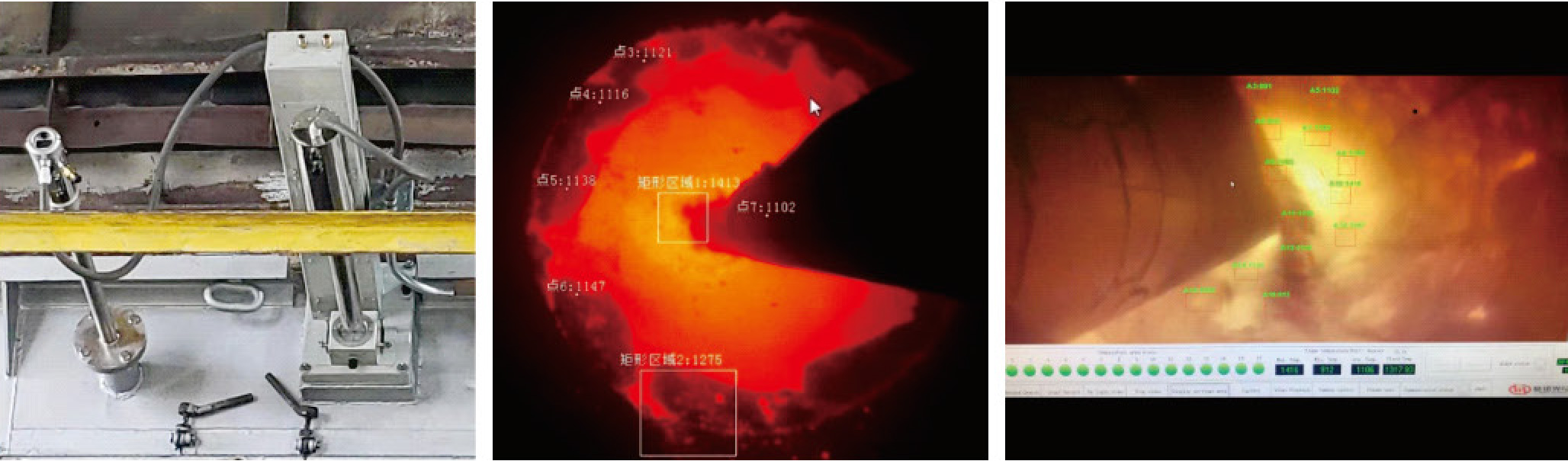
Beyond standard night vision, modern Blast-Proof EX IR Series cameras integrate advanced thermal profiling. This allows safety engineers to monitor batch processes (like nitrocellulose production) and detect early signs of thermal decomposition in peroxides or API synthesis reactions (LiAlH4, Grignards) before catastrophic thermal runaway occurs.
High-sensitivity sensors (NETD < 50mK) enable the detection of micro-temperature anomalies on agitator bearings or electrical busbars, facilitating true predictive maintenance without requiring personnel to enter hazardous zones.
Integrated Ecosystems & AI Analytics
Standalone cameras are insufficient for critical infrastructure. Modern facilities require an Integrated Explosion Proof Security Camera System. This ecosystem combines high-definition PTZ optics, Ex-rated junction boxes, armored fiber-optic cabling, and blast-proof control cabinets with centralized VMS. AI-driven analytics can automatically trigger alarms upon detecting smoke, unauthorized personnel, or abnormal thermal spikes, achieving up to 60% faster response times compared to manual monitoring.
Vertical Industry Applications
Critical Use Cases
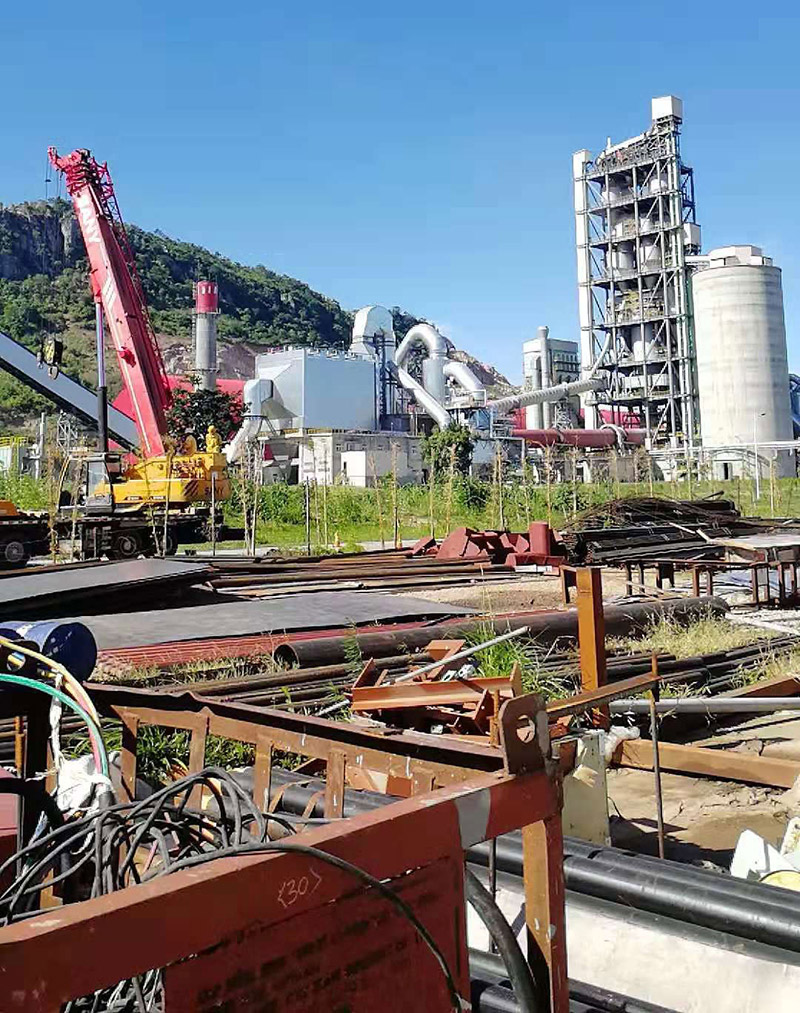
Chemical Reactor Monitoring: Real-time visual tracking of volatile reactions, eliminating the need for high-risk manual LOTO inspections.
Dust Hazard Areas: NFPA 85/120 compliant hotspot detection in coal pulverizers and aluminum powder drying operations.
Oil & Gas Critical Zones: Continuous surveillance of ATEX Zone 0 wellheads, flare stacks, and offshore platform perimeters.
Pharma API Synthesis: Safe observation of pyrophoric compound reactions inside cleanrooms and solvent storage areas.
Matching Hardware to Site Requirements
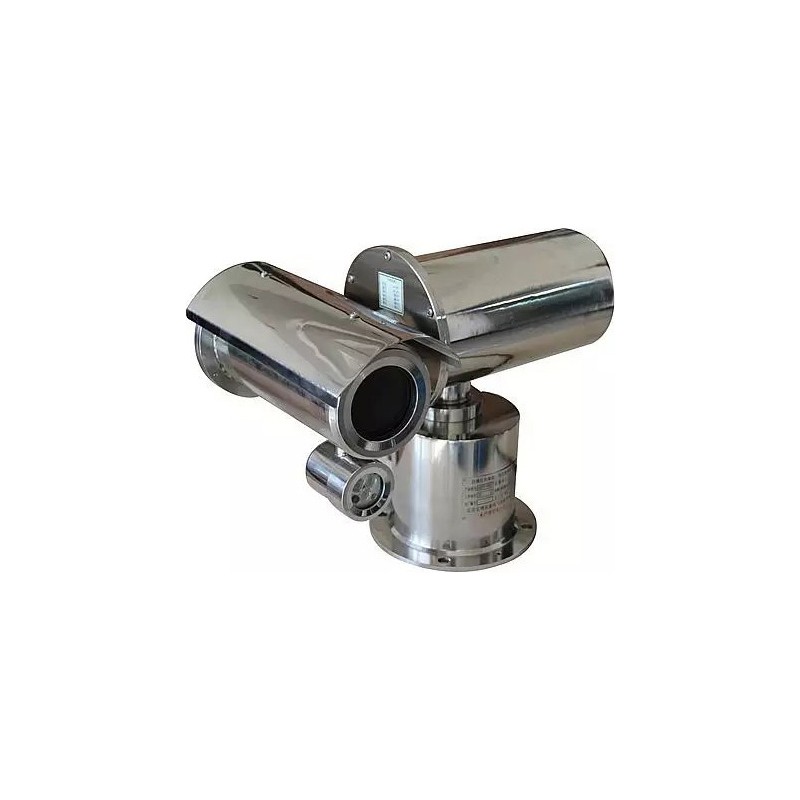
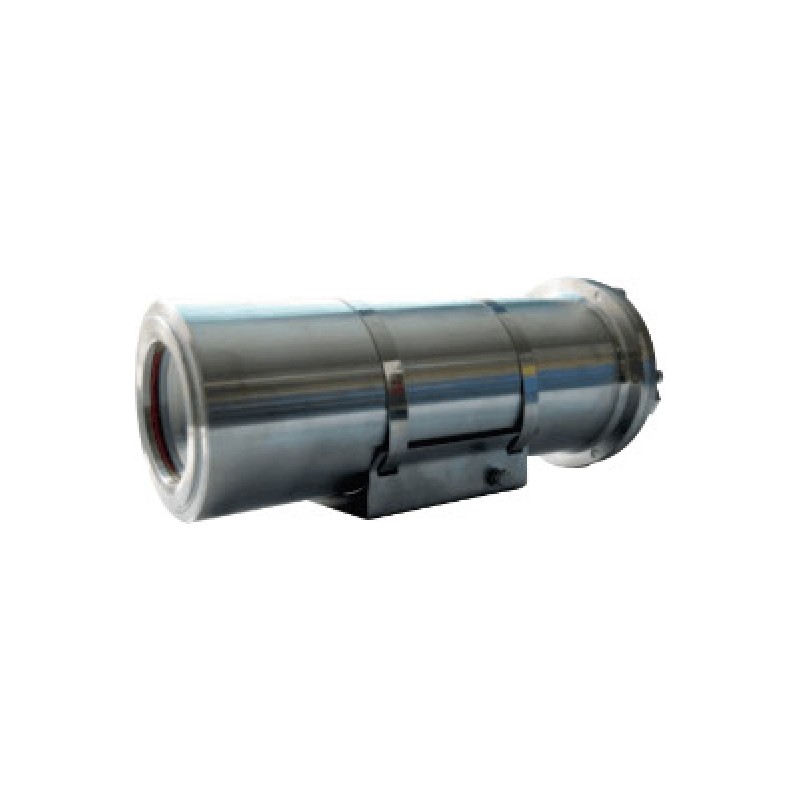
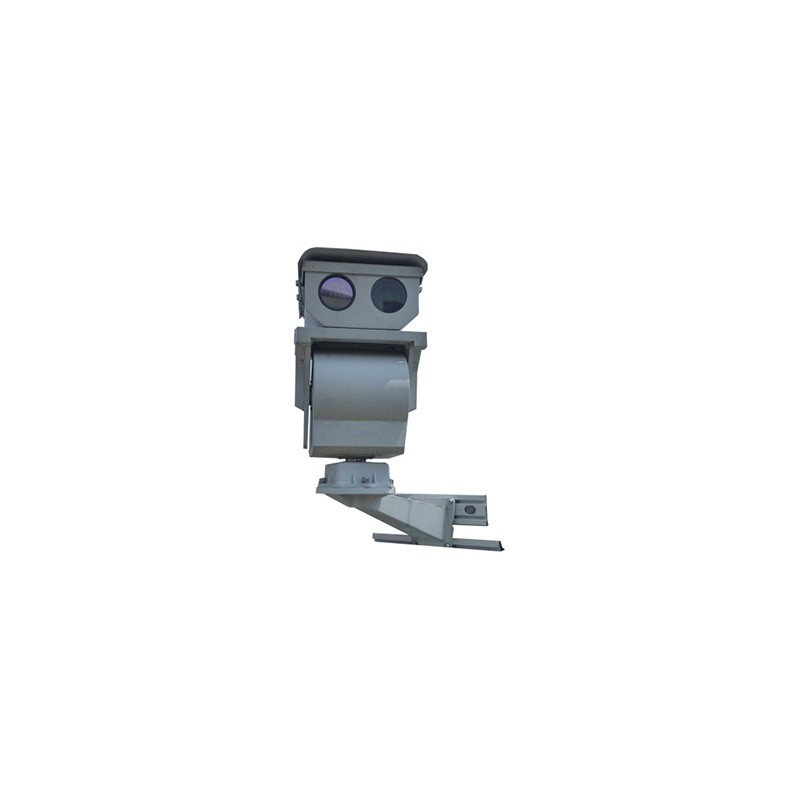
Changzhou Luming engineers versatile hardware solutions tailored to specific industrial stressors:
System Architecture | Engineering Features |
|---|---|
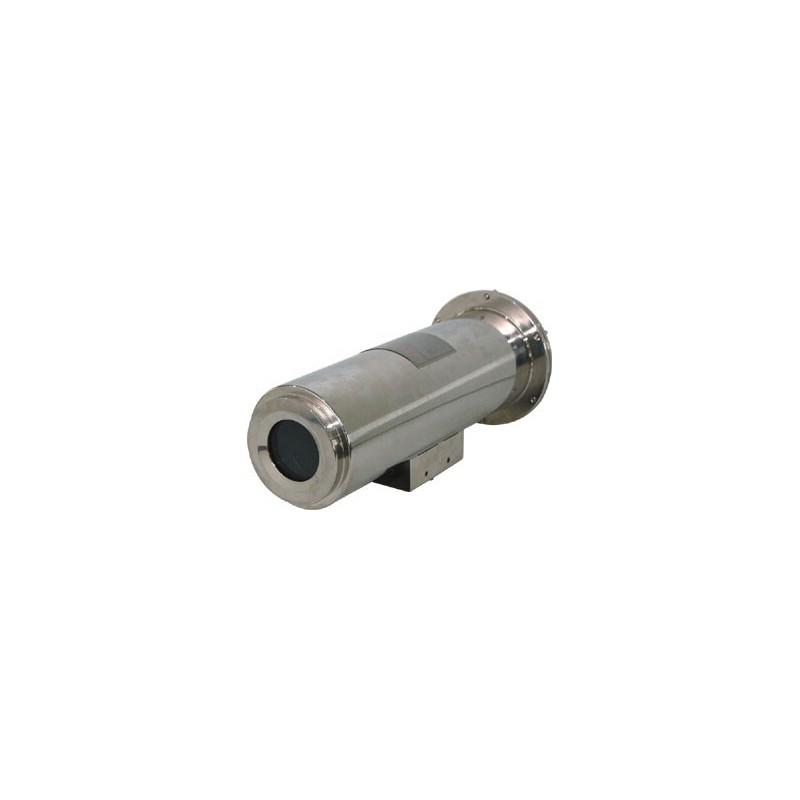
316L marine-grade housing; optimized for extreme corrosion and high-dust environments. | |
High-Speed PTZ Dome | 360-degree continuous rotation; ideal for large-scale perimeter and refinery yard monitoring. |
Integrated Infrared Network | Combines visible light with thermal imaging; laser illuminators for zero-light penetration. |
Blast-Proof Control Cabinet | IP68 stainless steel enclosure; integrates power management and Ex-rated junctions. |
Installation, Maintenance, and Lifecycle
Specialized Mounting & Cabling
Installation in hazardous zones strictly prohibits standard conduit. Systems must utilize explosion-proof flexible pipes, armored cable glands, and specialized fiber-optic/PoE transmission to maintain the integrity of the Ex-rated enclosure. Proper thermal isolation from reflective surfaces and high-heat pipes is also mandatory.
Maintenance & Calibration Protocols
Maintaining certification validity requires rigorous upkeep. Facilities should utilize professional Technical Support & Maintenance Services for regular calibration of thermal sensors, firmware security patching, and O-ring seal integrity checks.
Making the Final Selection
Before finalizing procurement, review real-world performance data. Explore our Global Project Cases to evaluate how our integrated security ecosystems operate in extreme offshore, mining, and chemical environments. Consulting directly with certified manufacturers ensures your system meets both local compliance and operational demands.
FAQ: Industrial Explosion-Proof Systems
Is an IP67 rating sufficient for explosive atmospheres?
No. IP67 only certifies dust and water resistance. It provides zero protection against internal electrical arcing igniting external flammable gases. True explosion-proof certification (ATEX/IECEx) is legally required for Zone 0/1/2 environments.
How do Ex-Proof cameras replace manual inspections?
By providing 24/7 continuous visual and thermal profiling, these systems eliminate the need for personnel to physically enter Class I Div 1 areas for routine Lockout-Tagout (LOTO) checks, drastically reducing human exposure to toxic or explosive risks.
What maintenance is required for the blast-proof housing?
Routine maintenance involves inspecting the integrity of the stainless steel housing, verifying the torque on explosion-proof cable glands, cleaning the tempered glass viewport, and recalibrating thermal sensors to ensure accurate predictive maintenance data.
Recent News
1.Top 10 Best Industrial Uses for Explosion Proof Cameras
2025-12-172.What Is an Explosion Proof CCTV Camera and How Does It Work
2026-01-083.What Is an Explosion-Proof Camera?Complete Guide for 2025
2025-11-214.How Explosion Proof Camera Works with Different Industries
2026-01-285.What Are Explosion Proof Cameras?
2026-01-16