
Explosion Proof Camera Selection Guide for Hazardous Areas
 Sep 23, 2026|
 View:37
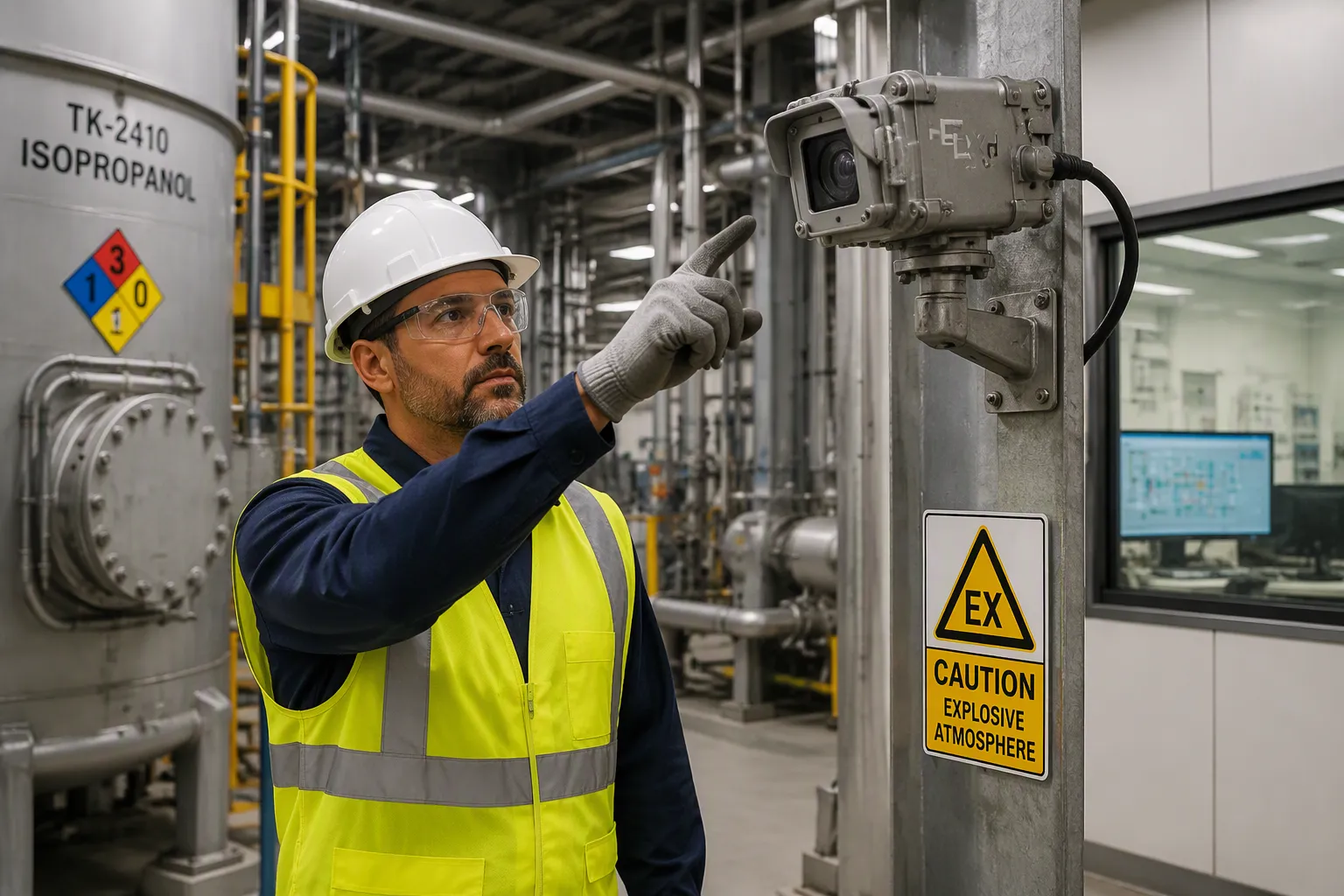
Selecting the correct surveillance equipment for classified locations requires matching three critical inputs: hazardous area classification, gas/dust groups, and temperature classes. Standard CCTV cameras pose severe ignition risks in these environments due to internal electronics and heat generation. This comprehensive guide breaks down essential certifications (ATEX, IECEx, CNEX), enclosure protection concepts (Ex d, Ex e, Ex p, Ex i), optical requirements, and total cost of ownership to ensure your facility remains compliant and safe. Always rely on official hazardous area classification drawings rather than verbal descriptions. The correct explosion proof camera ensures both operational continuity and personnel safety.
Key Takeaways
Match your camera's certification and protection concept to your area's specific Zone, gas group, and temperature class.
Understand enclosure types: Ex d for containment, Ex e for prevention, Ex p for exclusion, and Ex i for energy limitation.
Prioritize low-light performance, thermal imaging, and robust connectivity (fiber/wireless) for effective monitoring in harsh conditions.
Factor in installation, maintenance, and downtime risks when evaluating the total cost of ownership, rather than just the initial purchase price.
Select the configuration—fixed, PTZ, or portable intrinsically safe—based on your specific inspection and surveillance needs.
What Makes an Area Hazardous
Hazardous areas contain flammable substances that can ignite under specific conditions. Global standards like the NEC and IEC define these locations by the presence and frequency of flammable gases, vapors, or combustible dust. Understanding these classifications is the foundation of any safe equipment deployment strategy.
Zone vs. Division Classification
North America traditionally uses the NEC Division system, categorizing locations into Class I (gases), Class II (dusts), and Class III (fibers). Division 1 covers normal operating conditions, while Division 2 covers abnormal conditions or accidental releases.
The IEC system, widely adopted internationally (including ATEX in Europe and IECEx globally), uses Zones based on hazard frequency. Zone 0, Zone 1, and Zone 2 describe gas hazards, with corresponding Zones 20, 21, and 22 for dust. Zone 0/20 means continuous presence; Zone 1/21 means periodic presence; Zone 2/22 means brief or accidental presence.
| Aspect | NEC Division System | IEC Zone System |
|---|---|---|
Adoption | United States and Canada | International (IECEx, ATEX, CNEX) |
Basis | Classes (I, II, III) and Divisions (1, 2) | Zones (0/1/2 for Gas, 20/21/22 for Dust) |
Hazard Level | Div 1: Normal. Div 2: Abnormal | Zone 0: Continuous. Zone 1: Periodic. Zone 2: Brief |
Gas Groups, Dust Groups, and Temperature Classes
Gas groups define explosion severity based on the Maximum Experimental Safe Gap (MESG). Group IIA includes propane, Group IIB includes ethylene, and Group IIC includes hydrogen and acetylene. IIC represents the highest risk, and equipment certified for IIC automatically covers IIB and IIA applications.
Similarly, dust groups (IIIA, IIIB, IIIC) classify combustible flyaways, non-conductive dust, and conductive dust, respectively.
Temperature class (T-rating) defines the maximum surface temperature allowed. Equipment surface temperature must always stay below the auto-ignition temperature of the surrounding specific gas or dust mixture.
| Temperature Class | Max Surface Temp | Safe for Substances with Ignition Temp > |
|---|---|---|
T1 | 450°C | 450°C |
T2 | 300°C | 300°C |
T3 | 200°C | 200°C |
T4 | 135°C | 135°C |
T5 | 100°C | 100°C |
T6 | 85°C | 85°C |
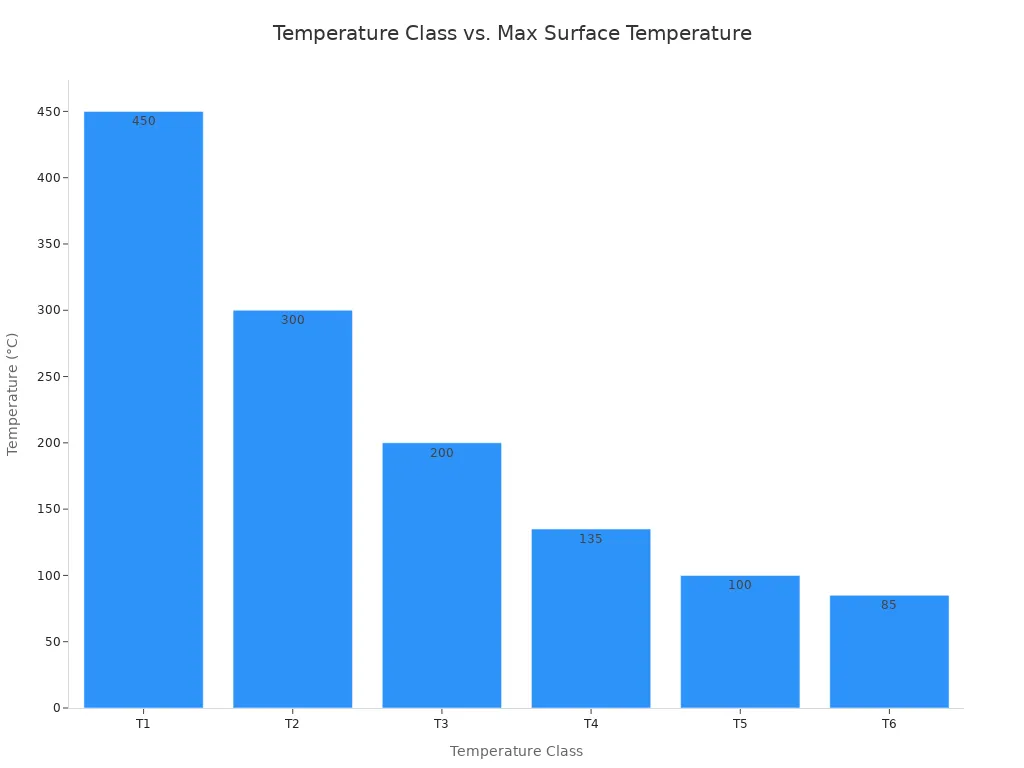
A T6 rated device is safe for nearly all volatile substances, whereas a T1 device requires environments with high auto-ignition temperatures. Area classification, gas/dust group, and temperature class must all perfectly align. For example, Lu Ming's high-temperature industrial cameras are engineered to meet strict T-class requirements while managing extreme external heat.
Certifications for Explosion Proof Cameras
ATEX, IECEx, CNEX, and Class/Division Marks
A recognized testing body must certify every explosion proof camera before installation in classified locations. Third-party certification ensures an independent laboratory has tested the equipment against rigorous standards.
ATEX certification is mandatory for equipment placed on the EU market, while IECEx serves as a widely accepted international scheme. For projects within China and many Asian markets, CNEX certification (based on GB3836 standards) is strictly enforced. North American facilities require UL, CSA, or FM marks under the Class/Division system. These schemes are not universally interchangeable; an ATEX certificate does not automatically permit installation in a US Class I Division 1 area without local approval.
| Certification Framework | Region / Scope | Mandatory Status | Certifying Body Examples |
|---|---|---|---|
ATEX | European Union | Mandatory | EU Notified Bodies (e.g., DEKRA, SGS) |
IECEx | International | Voluntary, widely recognized | IECEx-certified bodies |
CNEX | China | Mandatory | CNEX, PCEC, NEPSI |
NEC / UL | North America | Required under NEC | UL, CSA, FM Approvals |
Leading manufacturers like Lu Ming often pursue dual or triple certifications (e.g., ATEX + IECEx + CNEX) to cover multiple global markets with a single robust product design, simplifying procurement for multinational operations.
How to Read a Certification Label
A typical label carries several critical elements. The Ex marking identifies the protection type, such as Ex db for flameproof enclosures. The equipment group follows, with II for surface industries and I for mining. The equipment protection level (EPL) indicates zone suitability (e.g., Gb for Zone 1). The gas group and temperature class complete the marking.
"Simply placing a standard camera inside a certified enclosure does not guarantee the overall system is compliant. Hazardous location certifications apply to the entire tested assembly, including the specific camera model, internal wiring, and certified cable glands."
A marking such as Ex db IIC T6 Gb tells you the protection type, gas group, maximum surface temperature, and zone suitability. If your area requires IIC but the camera is certified IIB, it is the wrong unit. Field modifications, such as drilling new holes for antennas, void certification entirely.
Why Standard Cameras Fail in Hazardous Areas
Standard surveillance cameras contain multiple ignition sources. Power supplies produce arcs during switching, IR lamps generate intense heat, and processors run hot. In PTZ cameras, slip rings and motors can create friction sparks. Furthermore, a standard camera has no temperature class rating; its external housing can easily exceed 85°C (T6 limit) under direct sunlight or continuous IR operation, becoming a silent ignition source.
The Enclosure: Containment and Flame Paths
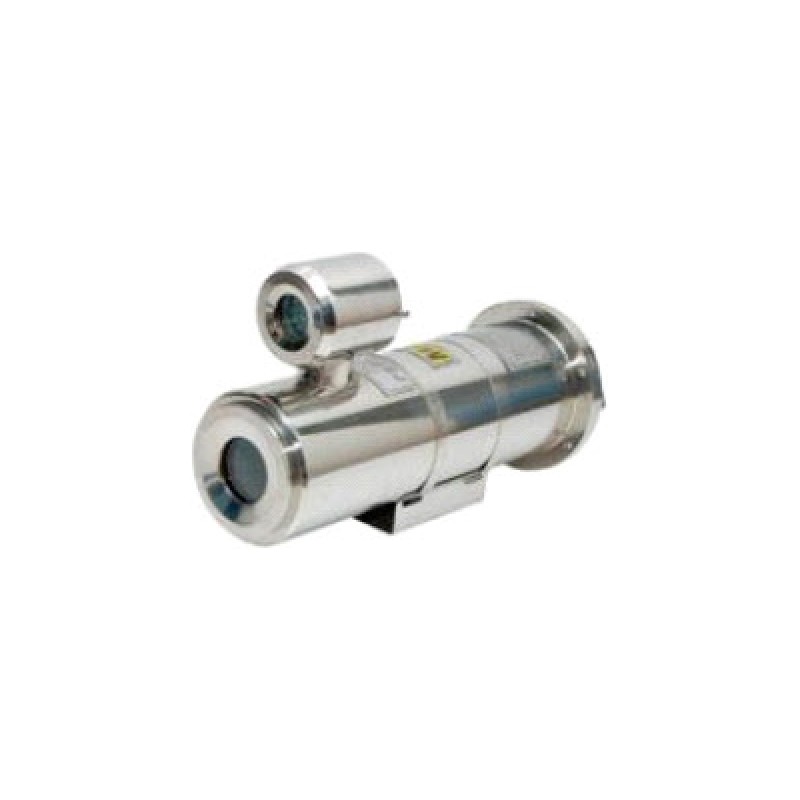
A certified explosion-proof camera housing (Ex d) is engineered to withstand an internal explosion. More importantly, the machined "flame paths" (threads and joints) are designed with precise tolerances to cool hot expanding gases before they escape to the outside atmosphere.
The certification applies to a specific tested assembly. When selecting equipment, always ensure you are purchasing a fully integrated, certified unit from a qualified manufacturer rather than attempting to retrofit standard electronics into third-party enclosures.
Explosion Proof Camera Selection Guide: Core Criteria
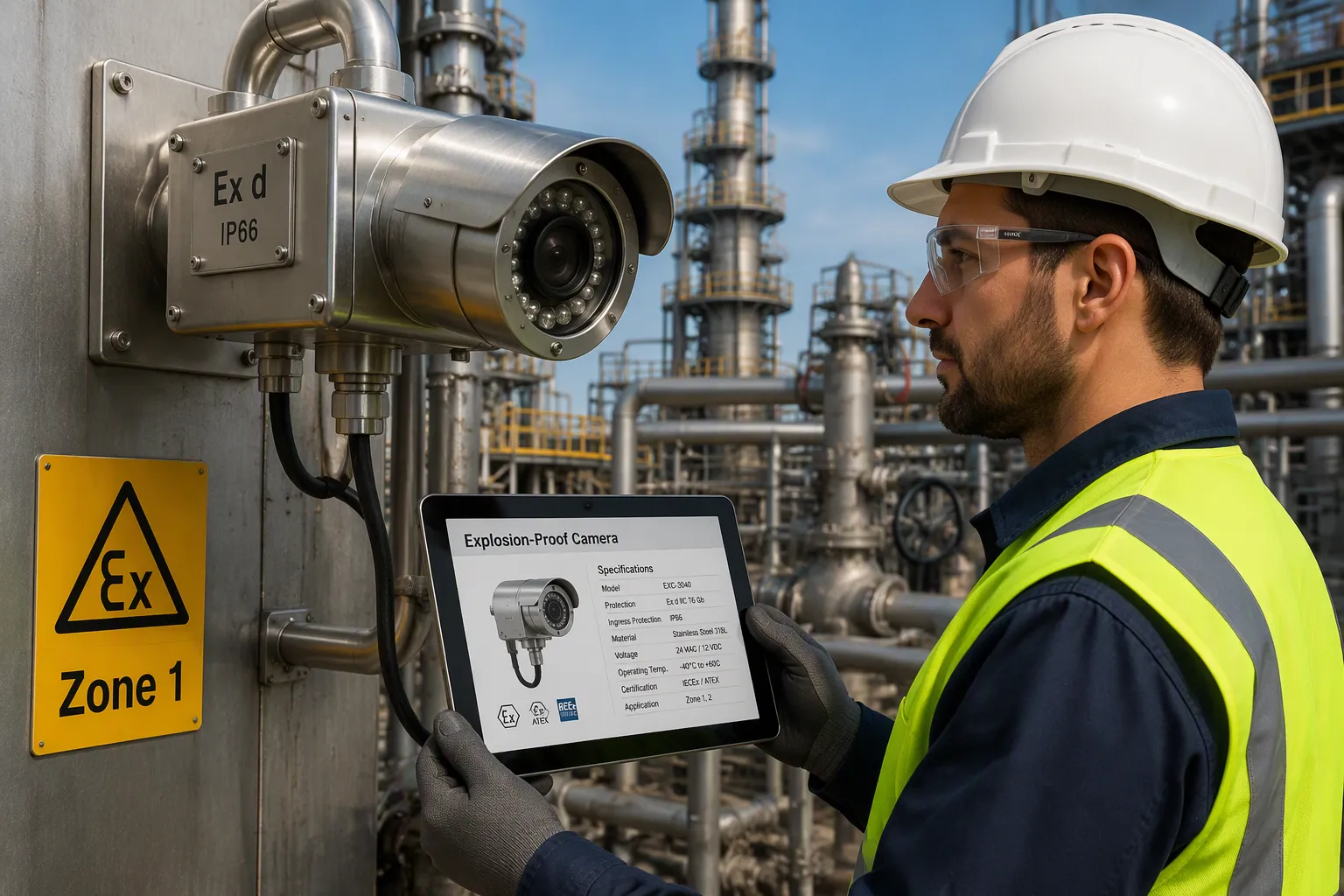
Protection Concepts (Ex d, Ex e, Ex p, Ex i) and IP Ratings
The protection concept dictates how the camera prevents ignition:
| Protection Type | Strategy | Best Fit for Cameras |
|---|---|---|
Ex d (Flameproof) | Containment | Fixed cameras, heavy-duty stainless steel housings |
Ex e (Increased Safety) | Prevention | Junction boxes, passive terminal connections |
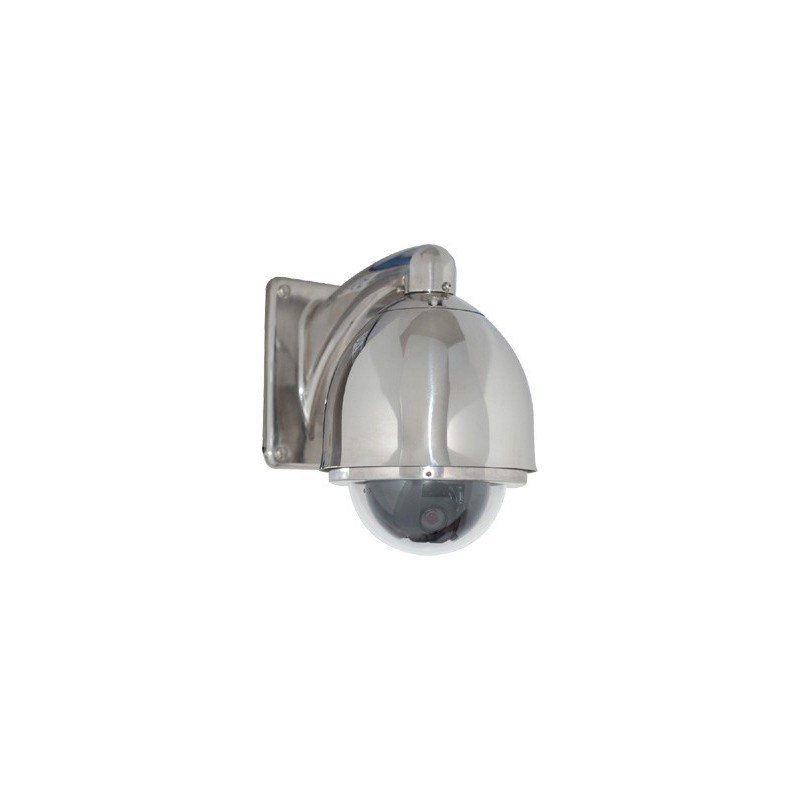
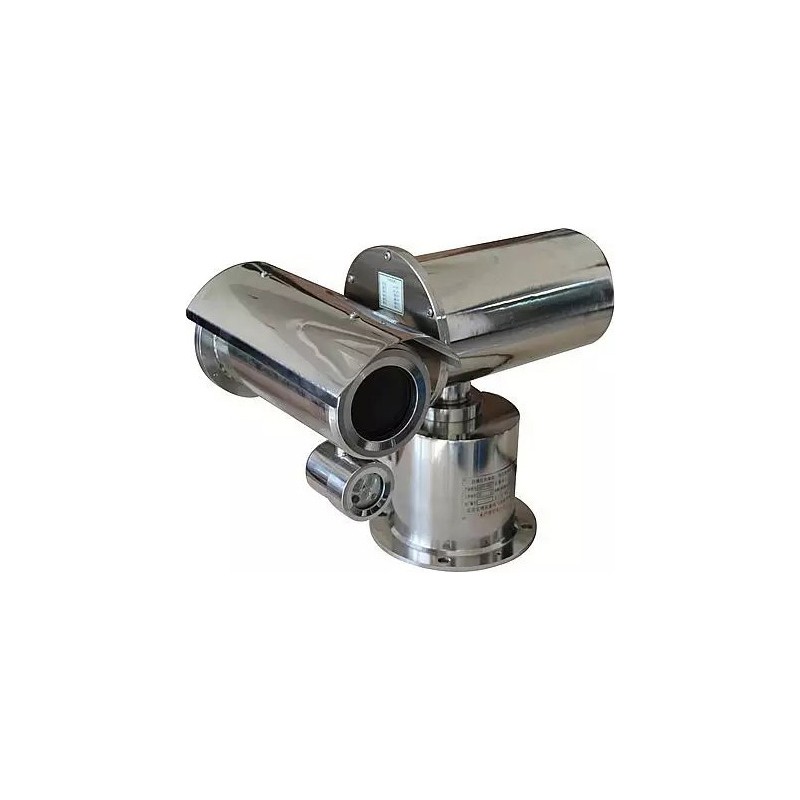
Ex p (Pressurized) | Exclusion | Large enclosures, PTZ systems with purging |
Ex i (Intrinsic Safety) | Energy Limitation | Portable inspection tools, low-power IoT sensors |
Beyond Ex ratings, IP and NEMA ratings address environmental ingress. For harsh offshore or chemical environments, 316L Stainless Steel with an IP68 rating is mandatory to resist salt spray and corrosive acids. For standard indoor chemical plants, 304 Stainless Steel or specialized aluminum alloys may suffice.
Optical and Connectivity Features That Matter
Image quality in hazardous areas often faces extreme challenges: low light, fog, or high heat distortion. High pixel counts are useless if the sensor lacks dynamic range. Modern explosion proof infrared and thermal cameras are critical for detecting gas leaks or overheating equipment in total darkness.
For connectivity, fiber optics are preferred in high-voltage or electrically noisy plants to prevent ground loops. Wireless (Wi-Fi 6 / 5G) is increasingly popular for temporary deployments, provided the antennas are certified for the specific Zone.
Choosing the Right Explosion-Protected Camera by Application
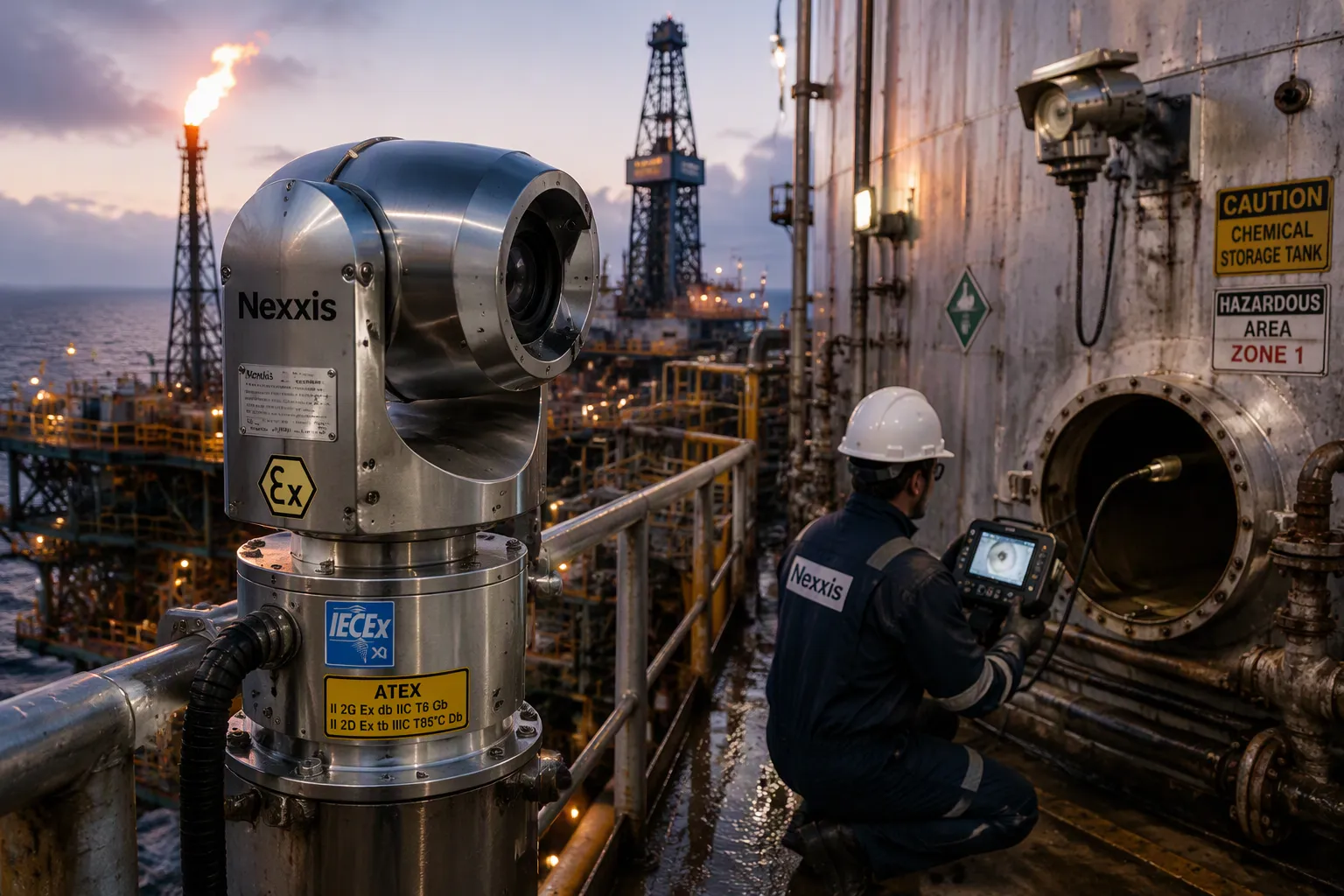
Industry-Specific Use Cases
Oil & Gas (Offshore/Onshore): Demands 316L stainless steel housings to survive salt spray and H2S corrosion. Cameras must monitor wellheads, flare stacks, and drilling floors continuously.
Chemical & Pharmaceutical: Requires strict adherence to T4/T6 ratings due to highly volatile solvents. Confined space inspections in reactors rely on compact, intrinsically safe portable inspection systems.
Heavy Industry (Cement/Metallurgy): Standard explosion-proof cameras will fail here due to ambient heat. Specialized water-cooled kiln cameras and furnace monitoring systems are required to withstand extreme radiant heat while maintaining explosive gas safety.
Fixed, PTZ, and Portable Configurations
Fixed Cameras: Best for 24/7 monitoring of critical valves and perimeters.
PTZ (Pan-Tilt-Zoom): Ideal for large refineries where operators need to investigate alarms or inspect distant flare stacks from a safe control room.
Portable / Intrinsically Safe: Essential for maintenance crews conducting confined space entries or temporary turnaround inspections. These devices limit electrical energy (Ex i) to prevent sparks even if dropped or damaged.
Compliance, Cost, and Total Cost of Ownership
Installation and Maintenance Realities
Installing certified equipment requires specialized barrier glands, sealed conduits (per NEC 501.15), and certified junction boxes. Maintenance in classified areas is expensive; it requires hot-work permits and specialized cleaning procedures. Budgeting for modular designs that allow quick component swaps without breaking the entire explosion-proof seal is crucial for minimizing downtime.
Balancing Upfront Price Against Downtime Risk
The cheapest unit rarely delivers the lowest total cost. A budget camera that fails prematurely in a Zone 1 area requires a costly shutdown and re-certification process to replace. Investing in scalable, Industry 4.0-ready designs with extended warranties and robust 316L construction significantly reduces long-term operational risk and ensures uninterrupted compliance.
Final Selection Checklist
Before finalizing your procurement, verify the following against your site's hazardous area classification drawings:
Certification Label: Does the Ex mark, Gas Group (e.g., IIC), and T-Class match the Zone exactly?
Material & IP Rating: Is 316L stainless steel required for corrosion resistance? Is IP68 necessary for washdown areas?
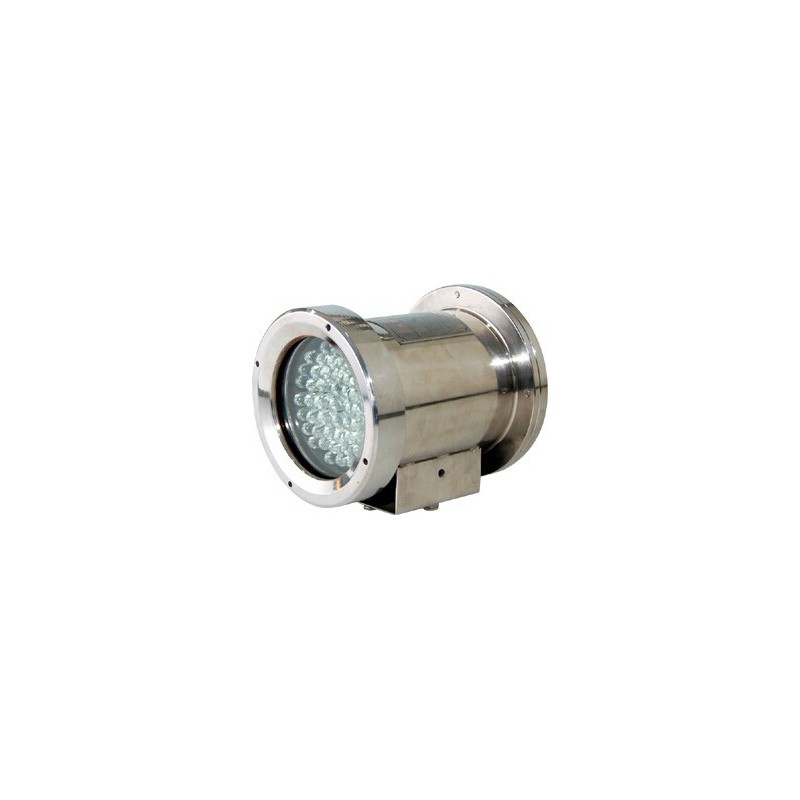
Optical Requirements: Do you need thermal imaging, IR illumination, or specialized cooling for high-ambient heat?
System Integration: Are the cable glands, junction boxes, and power supplies also certified for the same Zone?
Frequently Asked Questions (FAQ)
Can I use a standard camera inside a certified explosion-proof housing?
No. Certification applies to the complete tested assembly. The housing manufacturer tested specific heat-generating electronics inside that enclosure. Placing an unverified camera inside alters the thermal dynamics and internal spark risks, voiding the certification and creating a severe safety hazard.
What is the difference between Ex d (Explosion-Proof) and Ex i (Intrinsically Safe)?
Ex d (Flameproof) relies on a heavy enclosure to contain an internal explosion and cool escaping gases. It is used for high-power devices like PTZ cameras. Ex i (Intrinsically Safe) limits the electrical and thermal energy within the circuit so it cannot ignite a spark, even under fault conditions. It is typically used for low-power portable inspection tools and sensors.
Does an ATEX certificate work in the USA?
Generally, no. The US relies on the NEC and requires NRTL (Nationally Recognized Testing Laboratory) marks like UL or CSA for Class/Division or Zone compliance. While some ATEX/IECEx test data can be used to acquire a US mark through reciprocal agreements, the physical label on the camera must carry the appropriate US mark for local inspectors to approve it.
How often do explosion-proof cameras need maintenance?
While the internal electronics may last 5-10 years, external optical windows, wiper blades, and cable gland seals should be inspected annually. In highly corrosive environments (like offshore rigs or chemical plants), 316L stainless steel housings should be checked for pitting, and flame path threads must be re-greased with approved non-hardening compounds during every cover removal.
Need Help Specifying the Right Explosion-Proof Camera?
Hazardous area classification and equipment matching can be highly complex. Don't risk compliance failures, audit penalties, or safety hazards. Lu Ming's engineering team provides free site assessments, custom selection drawings, and certified ATEX/IECEx/CNEX solutions tailored to your specific Zone and environmental challenges.
Contact Our Engineers for a Free Quote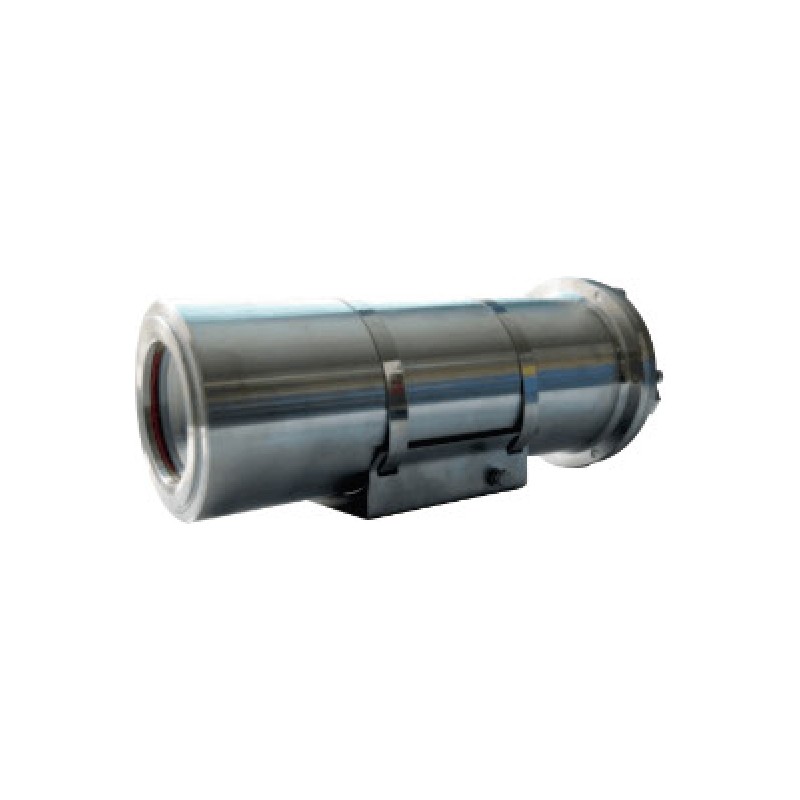
Recent News
1.What Are Explosion Proof Cameras?
2026-01-162.What Is an Explosion Proof CCTV Camera and How Does It Work
2026-01-083.Top 10 Best Industrial Uses for Explosion Proof Cameras
2025-12-174.How Explosion Proof Camera Works with Different Industries
2026-01-285.ATEX Kiln Camera Guide: Explosion Proof Monitoring
2026-05-20