



swir-vs-lwir-thermal-sensors-kiln-camera-selection-guide
 May 11, 2026|
 View:59
SWIR vs. LWIR Thermal Sensors for Rotary Kilns: How to Choose the Right Technology for Your Plant
In the cement, steel, and lime industries, a reliable rotary kiln monitoring system is the difference between predictable profits and catastrophic downtime. An unplanned shutdown can cost upwards of $120,000 to $180,000 per day in lost production and refractory damage.
To prevent this, modern plants invest in advanced thermal imaging. However, the performance of any rotary kiln monitoring system depends entirely on the sensor technology inside the kiln camera. Should you choose Short-Wave Infrared (SWIR) or Long-Wave Infrared (LWIR) for your kiln camera? For a complete overview of system architecture, installation, and ROI, read our comprehensive rotary kiln monitoring guide.
This guide breaks down the technical differences, application scenarios, and selection criteria to help plant engineers and procurement managers configure the optimal rotary kiln monitoring system.
1. The Core Difference: Wavelength and Temperature Range
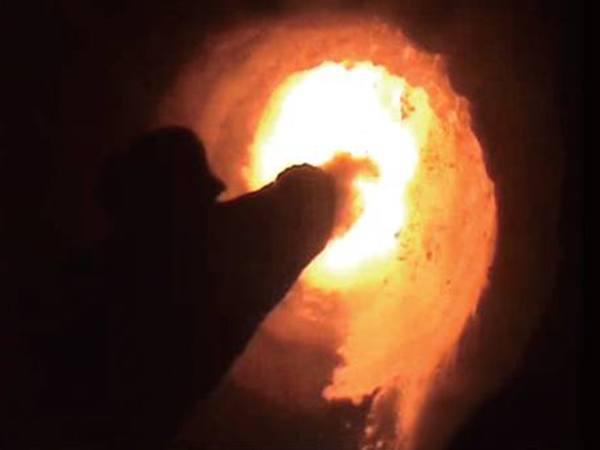
The primary difference lies in the wavelength of infrared light the sensor detects. When specifying a kiln camera, matching the wavelength to your process temperature is critical for accurate data.
Short-Wave Infrared (SWIR)
Wavelength: Typically 0.8 – 1.1 µm.
Temperature Range: Optimized for high temperatures (600°C to 2000°C+).
Key Characteristic: A SWIR-based kiln camera is less sensitive to emissivity changes and can "see" through flames, smoke, and dust better than standard sensors.
Best For: Viewing inside the kiln, monitoring the burner flame, and penetrating observation ports.
Long-Wave Infrared (LWIR)
Wavelength: Typically 8 – 14 µm.
Temperature Range: Optimized for lower to medium temperatures (Ambient to 600°C).
Key Characteristic: LWIR is the standard for detecting surface heat radiation. It is highly sensitive to small temperature gradients on the steel shell.
Best For: Scanning the exterior of the kiln to detect refractory wear, "red spots," and shell deformation.
2. Comparison Table: SWIR vs. LWIR
| Feature | Short-Wave Infrared (SWIR) | Long-Wave Infrared (LWIR) |
|---|---|---|
| Primary Application | Internal Kiln Monitoring / Burner Flame | External Kiln Shell Scanning |
| Ideal Temp Range | > 600°C (Up to 2000°C+) | -20°C to 600°C |
| Penetration | High (Penetrates flame & dust) | Low (Blocked by flame/glass) |
| Sensitivity | Lower sensitivity at low temps | High sensitivity at low temps |
| Typical Use Case | Clinker formation, burner stability | Refractory loss, shell hot spots |
3. Application Scenarios: Where to Use Which?
Scenario A: Kiln Shell Scanning (External)
Winner: LWIR (Long-Wave Infrared)
When monitoring the outside of the kiln, your goal is to detect heat radiating through the steel shell as refractory bricks wear thin. A panoramic LWIR kiln camera is the industry standard for this task.
Why LWIR? Shell temperatures typically range from 100°C to 400°C. An LWIR sensor provides the highest thermal sensitivity in this range, allowing your rotary kiln monitoring system to detect a "hot spot" long before it becomes a catastrophic "red spot."
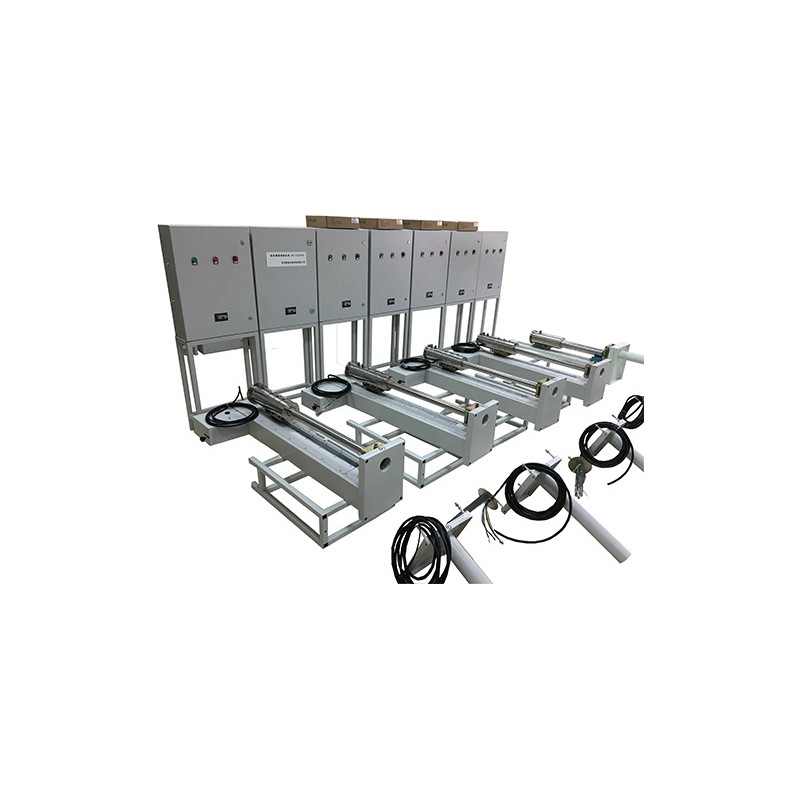
Setup: Usually a travel-drive scanner that moves along the kiln length, mapping the entire shell surface.
Scenario B: Inside the Kiln / Burner Monitoring
Winner: SWIR (Short-Wave Infrared)
When operators need to look into the kiln to check flame shape, clinker formation, or material bed dynamics.
Why SWIR? Internal temperatures exceed 1400°C. A standard LWIR kiln camera would be blinded or saturated. SWIR penetrates combustion gases and flames, giving your rotary kiln monitoring system a clear view of the process behind the fire.
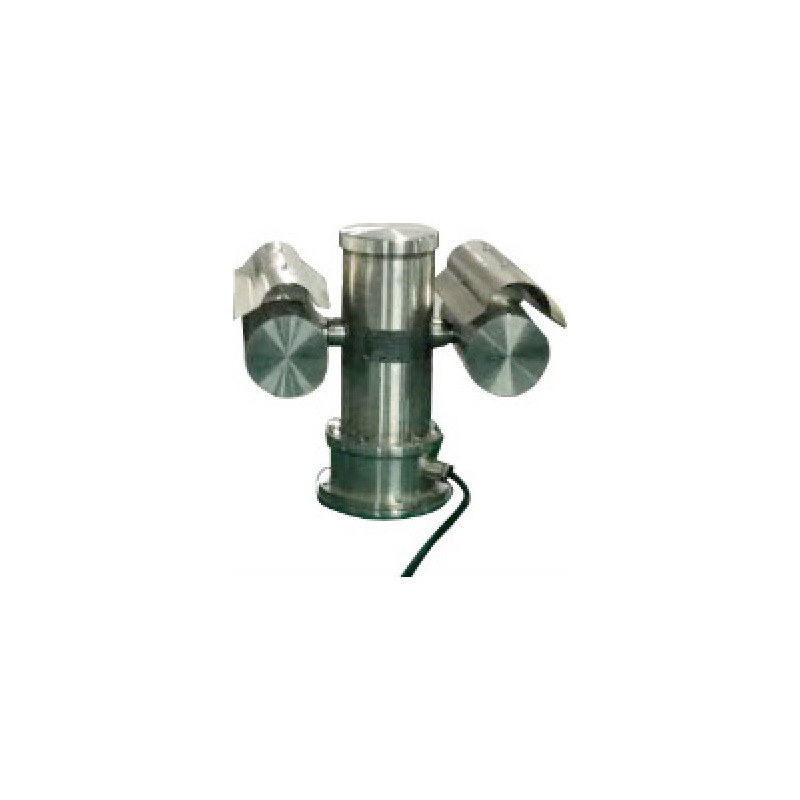
Setup: Fixed cameras mounted on the kiln hood or cooler, housed in specialized cooling assemblies (water or air purge).
Scenario C: The "Dual-Spectrum" Solution
Winner: Best of Both Worlds
For comprehensive coverage, leading facilities deploy a hybrid rotary kiln monitoring system.
Visual + Thermal: Combining a visible light kiln camera (for spatial context) with a thermal sensor.
SWIR + LWIR: Advanced setups use SWIR to monitor internal process health while LWIR tracks external shell integrity, ensuring zero blind spots.
4. Critical Considerations for International Buyers
Selecting the right sensor is only step one. When procuring a kiln camera for global deployment, you must verify these engineering and compliance factors:
1. Explosion Proof Certification (ATEX / IECEx)
Rotary kilns in cement and coal-fired plants often operate in Zone 1 or Zone 21 hazardous areas. Every kiln camera deployed in these zones must be intrinsically safe.
Requirement: Ensure the camera housing, cooling lines, and junction boxes carry valid ATEX (Europe) or IECEx (International) certifications. View our full certification portfolio.
Compliance: A non-certified rotary kiln monitoring system will fail safety audits and void insurance policies.
2. Cooling Technologies
The kiln camera must survive continuous exposure to radiant heat.
Water Cooling: Best for extreme heat loads but requires a clean, reliable water supply.
Air Purge (Vortex): Uses instrument air to cool the lens face and prevent dust accumulation. Ideal for water-scarce regions.
3. Integration with DCS/SCADA
A rotary kiln monitoring system is useless if the data stays isolated on a local screen.
Protocols: Ensure the kiln camera controller supports Modbus TCP/IP and OPC UA.
Automation: The system should push temperature alarms directly to your DCS (e.g., Siemens PCS 7, ABB 800xA) to trigger automatic burner adjustments or forced cool-down sequences.
5. Summary: How to Choose?
Choose LWIR if: You need to scan the outside of the kiln. An LWIR kiln camera is essential for protecting the steel shell and preventing refractory failure.
Choose SWIR if: You need to monitor the inside of the kiln. A SWIR kiln camera will optimize burner flame stability and clinker quality.
Choose Dual-Spectrum if: You want a fully integrated rotary kiln monitoring system that correlates visual blockages with thermal spikes for predictive maintenance.
Need a Custom Solution?
Every production line is unique. Kiln diameter, rotation speed, fuel type, and ambient conditions dictate the exact specifications of your kiln camera.
Don't guess with your plant's safety. Contact our engineering team for a Free Technical Assessment. We will analyze your process conditions and design a rotary kiln monitoring system that maximizes ROI, ensures compliance, and eliminates costly unplanned downtime.
Recent News
1.Rotary Kiln Monitoring System: Prevent Costly Downtime in Cement, Steel & Lime Plants
2026-04-302.Air Cooling vs. Water Cooling: Which is Right for Your Furnace Camera?
2026-02-283.The Ultimate Guide to Selecting a Furnace Monitoring Camera for 1000°C+ Environments
2026-03-114.Industrial Camera Solutions for High-Temperature Lime Kilns
2026-02-13