High Temperature Furnace Camera System for Garbage Incinerators Core Features
Advanced Thermal Protection: Engineered to withstand extreme radiant heat, enabling continuous 24/7 monitoring in furnace environments from 1200°C up to 2000°C.
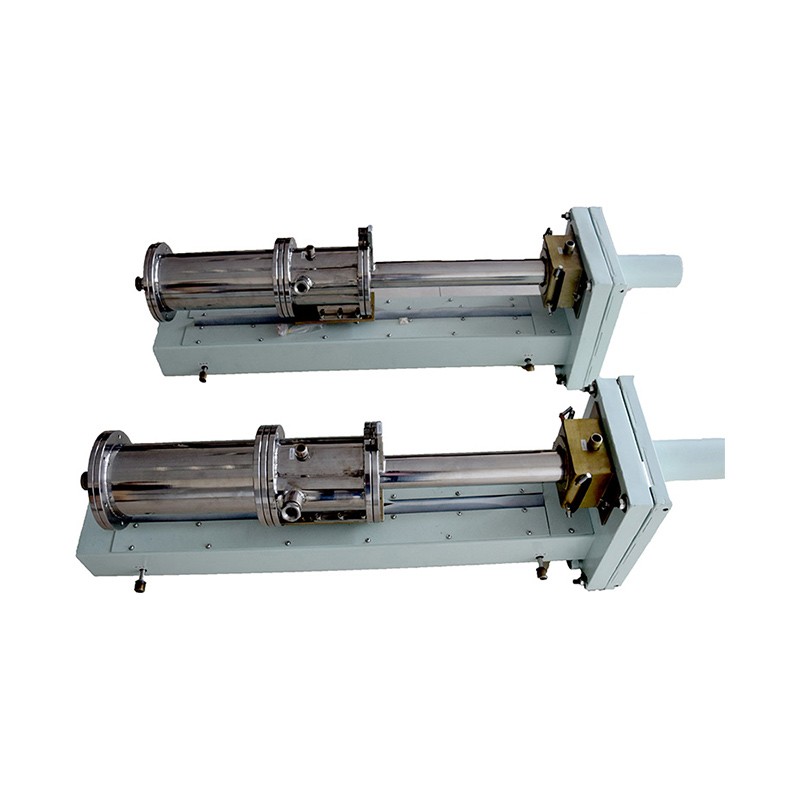
Fail-Safe Auto-Retraction: The High Temperature Furnace Camera System for Garbage Incinerators is equipped with an intelligent pneumatic/electric retraction device that automatically withdraws the probe during power loss, air pressure drop, or overheating to prevent lens damage.
Self-Cleaning Air Curtain: A specialized vortex cooling system creates a high-pressure air curtain over the lens, effectively repelling slag, fly ash, and smoke for a consistently clear view.
Military-Grade Sapphire Optics: This High Temperature Furnace Camera System features a premium sapphire glass lens with exceptional hardness and chemical resistance, ensuring longevity against corrosive flue gases.
DCS/PLC System Integration: Supports seamless data output to centralized control rooms, allowing operators to monitor combustion efficiency and grate status remotely.
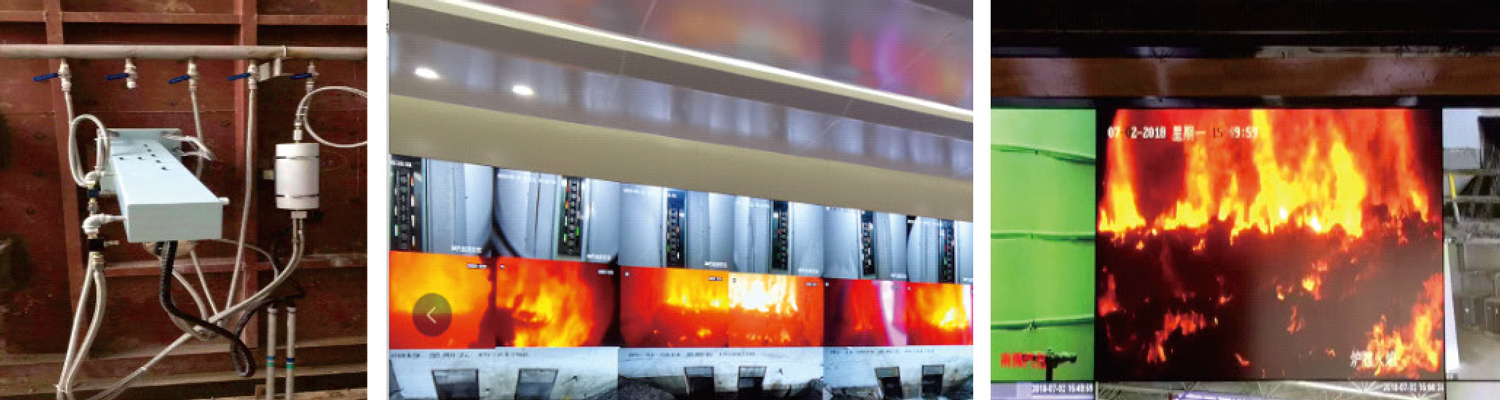
High Temperature Furnace Camera System for Garbage Incinerator Monitoring Parameter
Main function Probe will exit | 1. Temperature of the hood rises above 50°C (specified levels).
2. Compressed air input air pressure below 0.3MPa.
3. Probe hood cooling water input flow is less than 0.2M³/h.
4. Power is cut off.
5. Control room or control device of project site send out exit signal.
6. Alarm signal can be connected to the DCS. |
Technical parameters | 1. Resolution:1920*1080
2. Zoom: (electronic zoom 3.6-78) 27 x optical zoom
3. Exit distance: 300mm
4. Angle of view: 17°-81° focus or zoom
5. Lens aperture: electric remote control or manual control
6. Signal Noise Ratio:56db
7. Colour filter device: can choose red, yellow to filter or panchromatic filtration |
Compressed air | 1. Total intake pipe: G1"
2. Connecting pipe: 4-G1/2" (increase stop valve)
3. Inlet pressure: 0.3MPa~0.7MPa
4. Inlet temperature: ≤35°C
5. Minimum flow: 0.3M³/min |
Cooling water | 1. Total intake pipe: G3/4"
2. Connecting pipe: 2-G1/2" (increase stop valve)
3. Inlet pressure :0.2~0.5MPa
4. Minimum flow: 0.8M³/h
5. Inlet temperature: ≤35°C |
Working condition temperature | 1. Automatically exit device: -20°C~100°C
2. Control device: -5°C~75°C
3. Furnace temperature: ≦1700°C |
Dimension | A. Automatic exit device: 1300*500*300mm
B. Field control box: 500*700*200mm |
Application Scenarios
Our High Temperature Furnace Camera Systems are the preferred choice for real-time monitoring of combustion processes in:
Waste-to-Energy (WTE) Plants: Monitoring grate combustion and waste feed status.
Cement & Glass Kilns: Observing clinker formation and flame stability.
Steel & Metallurgical Industry: Real-time view of melting furnaces and ladles.
Thermal Power Plants: Monitoring coal-fired boiler burner zones.
FAQ:High Temperature Furnace Camera Systems
Q1: How do the camera systems survive environments exceeding 1000°C?
A: Our systems use a multi-layered 316L stainless steel cooling jacket (air or water-cooled) combined with a high-velocity air curtain at the lens tip. This design effectively dissipates heat and blocks dust, allowing stable operation in temperatures up to 1600°C.
Q2: Will the camera burn out during a power or cooling failure?
A: No. Every High Temperature Furnace Camera System includes an intelligent auto-retraction device. If the system detects a loss of power, air/water pressure, or a temperature spike, the pneumatic mechanism withdraws the probe within seconds to prevent thermal damage.
Q3: Can the High Temperature Furnace Camera see through thick smoke and intense flames?
A: Yes. We utilize advanced spectral filtering and High Dynamic Range (HDR) sensors. By filtering specific light wavelengths, the system "pierces" through flames and smoke to clearly show burden distribution, combustion status, and slag formation.
Q4: Should I choose air cooling or water cooling?
A: It depends on your furnace. Air cooling is easier to install and ideal for environments below 1000°C. Water cooling offers superior heat dissipation and is the recommended standard for the core combustion zones (1200°C+) of garbage incinerators.
Q5: Is the maintenance of these High Temperature Furnace Camera Systems difficult?
A: Not at all. Maintenance primarily involves checking filters for clean cooling media and inspecting the lens tip for slag every few months. The integrated self-cleaning air curtain significantly reduces the need for manual lens cleaning.
After-Sales Services
User manuals, video tutorials, and on-site training (upon request)