



Advanced Solutions for Kiln Refractory Monitoring System
 Aug 19, 2025|
 View:263
Industrial kiln:the heart of the high temperature processing industry
Industrial kiln is the core equipment in the high temperature heating process of the modern material manufacturing industry. The core of it is to accurately control the thermal environment to achieve the physical and chemical conversion of materials. In the cement industry, kilns about 4m to 6m in diameter are operated at a constant speed of 3-5 R.P.M. where limestone is calcined with clay at 1450 before the cement clinker is produced, which necessitates the continuous operation of the kiln for over 300 days. In the ceramic industry, the glass phase is formed and densified at a temperature of 1280 ℃ by zoned temperature control technology in a roller kiln with a length of more than 150 m The temperature fluctuation should be strictly controlled within the range of ± 2 ℃ every 24 h on the blast furnace in the metallurgical field, a high-temperature environment can be established above 1500 ℃, and liquid pig iron is continuously produced by the combustion of coke and the reduction of iron ore the daily output of a single blast furnace can be about 10,000 tons.
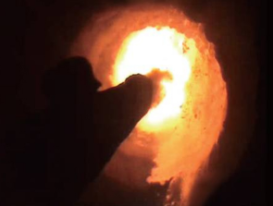
The common working principle of these kilns is to construct a triple thermal control system :a fuel combustion or electrical heating system to generate the base heat source, and a Refractory lining to form a thermal insulation barrier, intelligent temperature control device to achieve dynamic regulation of temperature field. In a glass furnace, for example, the temperature of the flame space can reach 1600 °C, while the outside temperature of the pool wall needs to be controlled below 80 °C. this temperature gradient of more than 1500 °C is completely dependent on the thickness of the Refractory layer of 300-500 mm. As the“Heart equipment” of high temperature industry, the operation state of kiln directly determines the product quality and production efficiency. According to the measured data of float glass production line, for every 1 °C increase in furnace temperature fluctuation, the viscosity of glass melt changes by 0.02 pa · s, which directly leads to 0.1 mm increase in product thickness deviation.
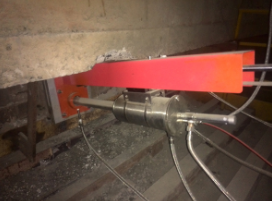
Refractory lining: “Life protection system” of kiln
In the interior of the kiln, the composite refractory layer composed of high alumina brick, magnesia brick, silicon carbide and other materials undertakes the task of resisting extreme working conditions. These materials need to meet three major performance indicators at the same time: maintaining structural stability at 1200-1800 °C, resisting the chemical attack of molten materials (such as liquid phase in cement clinker, alkali metal in glass liquid) , and improving the corrosion resistance of glass, bear material flow (such as ceramic body transport, ore drop) generated by the mechanical impact. Taking the cement rotary kiln as an example, the mafic spinel brick used in its firing zone needs to withstand the strong alkaline corrosion of the clinker melt and the rotation stress of 3 revolutions per minute, and the annual loss of a single brick can reach 50-80 mm.
The loss mechanism of the Refractory is characterized by a typical“Broken window effect”: the initial microcracks (0.1-0.5 mm) propagate under thermal stress, resulting in a 3-5 times increase in local heat conduction efficiency, initiates accelerated deterioration of surrounding materials. The monitoring data of a blast furnace in an iron and steel enterprise show that when the thickness of the refractory layer is reduced from 1200 mm to 900 mm, the furnace shell temperature rises sharply from 80 °C to 210 °C, and the frequency of abnormal water pressure of the cooling stave increases by 4 times, the result was an $8 million replacement of the entire cooling system.
There are two fatal defects in traditional monitoring methods: manual inspection relies on experience, which is difficult to find early micro-damage (such as 0.2 mm level crack) ; regular shutdown maintenance causes huge economic losses, taking a 5,000-ton-per-day cement production line as an example, the direct loss of a single kiln shutdown overhaul exceeds 2 million yuan, which indirectly affects the higher cost of supply chain collaboration. This contradiction between“Detection lag” and“Over-maintenance” gives birth to the urgent need for real-time online monitoring technology.
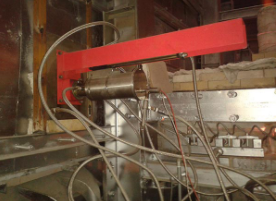
Luming Kiln Refractory Monitoring system: a technical breakthrough of non-contact detection
LUMING's Kiln Refractory Monitoring Utilizes military grade infrared thermal-imaging technology can "See" refractory in real time. The original instrument of the system is a cold source with vanadium oxide uncooled detector thermal imager of 640×512 pixels, all technical index reaches the advanced level in the field: temperature measurement range: -20 ℃ ~2000 ℃,Means can from the low temperature preheat area to ultra high temperature calcinations area,The whole working condition monitoring; 8-14μ M frequency region of the longer infrared, design can effectively penetrate dust and moisture on the surface of kiln interference;Typical working condition (300-1500 ℃) kiln temperature30 0 ℃,1000 ℃ ,1500 ℃ ,1500 ℃ ,1500 ℃ ,1500 ℃In under the condition, the temperature measurement accuracy is 0.5 ℃, and the repeatability error is ≤0.3 ℃ 。
The Kiln Refractory Monitoring system is founded on the principle of Planck's law and heat transfer: the blocked heat transfer path is recreated when the Refractory cracks or drops, which leads to an abnormal increase in temperature in the affected region of the kiln shell. Through the reverse calculation of the damage locati0n and the damage degree, analyzed the 0.1 °C small temperature difference.
The intelligent analysis software is the so-called “Brain” of the machine, and its three creative functions make up a complete monitoring“close loop”: It supports the setting of different monitoring parameters for different parts of the kiln by“Custom Roi (region of interest) analysis”, Actually, the design of the monitoring system originate from the analysis of region of interest (Roi), e.g., By applying a temperature different threshold of 0.3 °C to the vulnerable kiln entrance area,and a relaxed threshold of 1.5 °C to the relatively stable cooling zone. The multi-spectral fusion technology realizes the thermal image and the visible light images accurate registration, and the registration error is less than 0.1 pixel, realizing the millimeter-level locati0n of the damage position. According to the deep learning based early warning model, the dynamic threshold curve is generated automatically by analyzing the 100,000 groups of historical data records, which can help to increase the early warning accuracy from 68% to 95%.
Luming thermal camera monitoring system provides numerous advantages that meet the demand of industrial kiln operators, from safety to cost savings. One of its main benefits is the vast improvement of the employees' safety culture. When it detects hot spots and refractory deficiencies early, the system prevents sudden failure that might result in a hot material or gas leaks. This is a preemptive measure that reduces the risk of both fires and explosions, as well as workers being placed in dangerous situations while on the job; this means less incidents and less citations against a company.
In addition, another important advantage is the prolongation of the refractory life. In so doing, the system affords operators, with real-time and accurate information on the operating condition of the lining, to apply focused maintenance plans. Rather than periodically replacing refractories (which may be too late or too early), this system is designed to identify areas where repair of the refractory is required, ultimately saving time and money. Not only does this mean fewer large scale overhauls, it also means that the refractories are being used most efficiently, decreasing overall maintenance costs.
It also helps in improving the operational efficiency by minimizing the unplanned downtime. Refractory failure is one of the most expensive downtime events in a process plant, typically requiring lost production, missed deadlines and emergency repairs. The real-time monitoring and early warning system of Luming enables operators to carry proper maintenance during scheduled downtime to prevent such interruption. And the energy management advantages of the system are significant: by detecting heat loss due to faulty refractory, kiln settings can be adjusted to minimise energy usage, decreasing fuel bills and environmental impact.
To summarise, Luming’s thermal camera monitoring system is a complete system for ensuring security of kiln operation, using advanced technology which is compatible with real work process. Its potential to address safety, extend equipment life, cut costs and facilitate compliance adds value to any industrial plant with high-temperature kilns.